Taking and Sharing Client Photos and Videos in Your Beauty Business: An Australian Compliance Guide
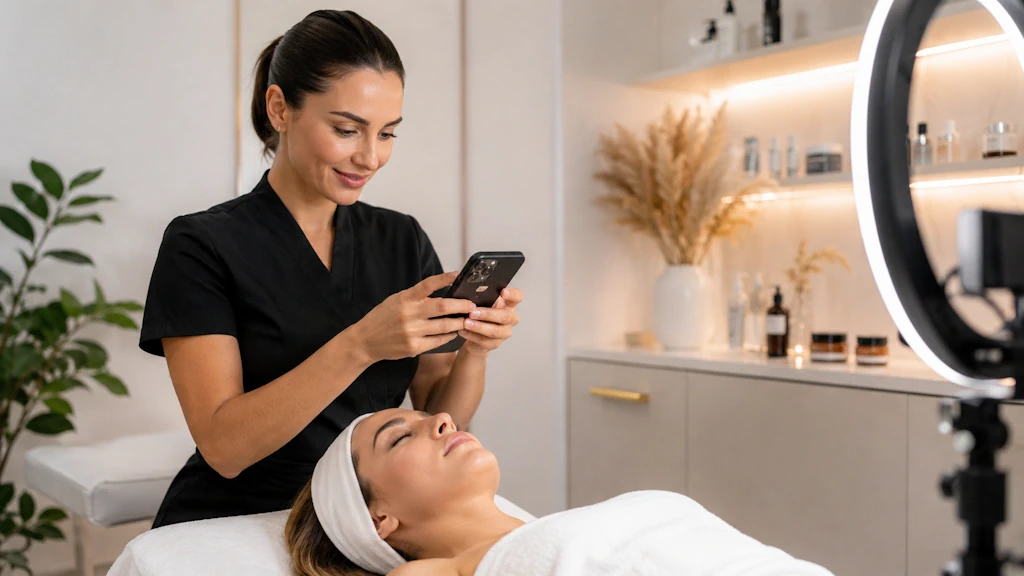
Before-and-after photographs, treatment videos and client transformations have become an important part of marketing a beauty business.
A salon may use client images on Instagram, Facebook, TikTok, its website, advertisements, training material or promotional emails.
But a client agreeing to have a treatment does not automatically mean they have agreed to be photographed, filmed or used in your marketing.
Beauty businesses should have clear procedures for obtaining permission, storing images and ensuring that photographs and videos used in advertising do not create a misleading impression.
This guide explains some of the important issues Australian beauty businesses should consider.
Important: This article provides general educational information for the Australian beauty industry. Privacy, advertising and consent requirements can depend on the business, the service being provided and the circumstances in which content is collected and used. It is not legal advice.
Treatment Consent and Marketing Consent Are Different
One of the most important distinctions for beauty businesses is between:
consent to receive a treatment
and
consent to be photographed or filmed and have that material published.
A client signing a treatment consultation or consent form should not automatically be treated as permission for their image to appear on your website or social media.
If you intend to use photographs or videos for marketing, obtain specific permission for that use.
A separate photography and media consent section—or dedicated media consent form—can make the client’s choice much clearer.
Ask Before You Take the Photo
Good professional practice is to explain what you want to photograph or record before doing it.
For example:
“I’d like to take before-and-after photographs of your treatment. Would you be comfortable with us using these on our website and social media?”
Clients should have an opportunity to understand what they are agreeing to.
They should also be able to decline marketing photography without feeling that refusing will affect the standard of their treatment.
What Should a Client Media Consent Form Cover?
A well-designed consent process should clearly identify what the client is agreeing to.
Depending on how your business uses content, this may include permission to:
- take photographs
- record video
- photograph the treatment area only
- show the client’s face
- publish images on the salon website
- publish content on social media
- use content in digital advertising
- use content in printed marketing
- use content in educational or training material.
Avoid vague wording where possible.
For example, a client might be perfectly comfortable allowing a close-up photograph of their eyebrows on your salon’s Instagram page but not want a full-face video used in paid advertising.
Giving clients clear choices can help avoid misunderstandings.
Don’t Assume Verbal Permission Is Enough
A casual:
“Do you mind if I put this on Instagram?”
can easily create disagreement later about exactly what the client agreed to.
Was permission given for one Instagram Story?
A permanent Instagram post?
The salon website?
Facebook?
Paid advertisements?
An email campaign?
A training manual?
Obtaining clear written or electronically recorded consent provides a much better record of what was agreed.

Be Particularly Careful With Identifiable Clients
A photograph doesn’t necessarily need to show someone’s entire face to identify them.
Tattoos, jewellery, distinctive features, clothing, voice, location and other details may potentially identify a person.
If anonymity is important, consider what is visible or audible throughout the entire image or recording rather than simply cropping out the client’s eyes.
What About Australian Privacy Law?
Privacy law is an area where beauty businesses should avoid overly broad assumptions.
Not every Australian small business is automatically subject to the Privacy Act 1988 in exactly the same way.
Whether the federal Privacy Act applies can depend on factors including the nature of the organisation, its activities and whether an exemption applies.
Other legal obligations may also be relevant.
For that reason, beauty businesses should not assume either:
“The Privacy Act definitely applies to every salon”
or:
“We’re a small business, so privacy law doesn’t affect us.”
Businesses that collect significant amounts of client information, health-related information, consultation records, photographs or treatment information should understand which privacy obligations apply to their particular operation.
Regardless of whether a particular privacy law applies, obtaining clear consent and treating client information and images responsibly is sensible professional practice.
Store Client Images Securely
Client photographs shouldn’t be treated like ordinary social photographs.
Consider where your salon’s images are actually stored.
They may exist on:
- a therapist’s personal phone
- the salon phone
- tablets
- computers
- cloud storage
- booking software
- social media accounts
- messaging applications.
Personal devices can create particular problems when staff leave the business or when phones are lost, stolen or shared.
A business should establish a clear policy covering who may take client photographs, which devices may be used, where the files are stored and who can access them.
Before-and-After Photos Must Not Mislead Consumers
Consent isn’t the only compliance consideration.
If a photograph is being used to promote a beauty service, it becomes part of your advertising.
Australian Consumer Law applies to advertising on social media just as it does to other forms of advertising.
Beauty businesses therefore need to consider whether the overall impression created by a photograph, video, caption and associated claims is truthful.
Be Careful With Filters and Editing
Editing a treatment result can create a misleading impression.
Be particularly cautious about alterations that:
- smooth skin
- remove pigmentation
- remove blemishes
- whiten teeth
- reshape facial features
- increase lash density
- alter eyebrow shape
- remove wrinkles
- change skin tone
- exaggerate body-contouring results
- artificially improve the apparent treatment outcome.
Even if the accompanying words are technically correct, the overall impression created by the advertisement matters.
Beauty businesses should therefore avoid editing treatment-result photographs in a way that exaggerates what the service actually achieved.
Keep Before-and-After Conditions Consistent
Good before-and-after photography should aim to show the treatment result fairly.
Where practical, keep the following consistent:
- lighting
- camera
- camera angle
- distance
- client position
- facial expression
- background
- clothing
- make-up
- image exposure.
For example, photographing a client’s skin under harsh overhead lighting before treatment and flattering diffused lighting afterwards could make the result appear greater than it actually was.
Similarly, a body-contouring “after” photograph taken with different posture, clothing and camera positioning may create a misleading impression.
Consistency makes your results more credible and your marketing more professional.
Don’t Use Someone Else’s Results as Your Own
Images sourced from manufacturers, trainers, stock libraries or other businesses should never be presented in a way that suggests your salon achieved the result if it did not.
If you use a supplied image legitimately, make its context clear.
A prospective client should not reasonably believe that a result was achieved by your business when it wasn’t.
Be Careful With Treatment Claims
A photograph may also communicate an implied claim.
For example, pairing a dramatic before-and-after photograph with statements such as:
“Erase wrinkles”
“Permanent fat removal”
“Guaranteed results”
or
“Get rid of pigmentation”
can create advertising compliance concerns if the claims cannot be substantiated.
Australian businesses are expected to ensure advertising claims are accurate, truthful and based on reasonable grounds.
Beauty businesses should therefore consider the image and the words together rather than reviewing the caption in isolation.
What About Client Testimonials?
Testimonials and reviews are another area where the type of service matters.
For ordinary beauty services, Australian Consumer Law remains highly relevant. Businesses must not create fake or misleading reviews or present testimonials in a misleading way.
However, additional rules can apply where a business is advertising a regulated health service.
This distinction is important.
Does AHPRA Apply to Every Beauty Salon?
No.
Beauty businesses should not state that every salon or beauty therapist is automatically governed by AHPRA advertising rules.
AHPRA and the National Boards regulate registered health practitioners and advertising of regulated health services under the Health Practitioner Regulation National Law.
This can become relevant, for example, where a clinic provides or advertises services that fall within the regulated health-service framework.
Businesses operating in this area need to understand the additional advertising requirements that apply.
Regulated Health Services Have Additional Advertising Rules
Advertising a regulated health service is subject to specific National Law requirements.
Among other things, advertising must not:
- be false, misleading or deceptive
- use prohibited testimonials about clinical aspects of a regulated health service
- create an unreasonable expectation of beneficial treatment
- encourage indiscriminate or unnecessary use of regulated health services.
A clinic offering both ordinary beauty services and regulated health services therefore needs to be particularly careful about assuming the same marketing rules apply to every service.
Before-and-After Images for Regulated Health Services
AHPRA also provides specific guidance concerning photographs used in advertising regulated health services.
Before-and-after images can potentially be misleading if they create unrealistic expectations.
Among other considerations, AHPRA advises that photographs are less likely to mislead where factors such as content, camera angle, background, framing, exposure, posture, clothing, make-up, lighting and contrast are kept consistent.
Images should also not be edited or enhanced in a way that misrepresents the outcome.
Additional and more restrictive advertising requirements can apply to particular higher-risk cosmetic procedures.
If your business provides services involving registered health practitioners or regulated health services, check the current AHPRA and relevant National Board advertising requirements rather than relying solely on general beauty-industry marketing practices.
Don’t Confuse a Client’s Social Media Post With Your Advertising
A client may independently post about their treatment on their own social media account.
That is different from your business taking their photograph and publishing it as advertising.
It can also be different from your business taking a client’s review, photograph or post and republishing it on your own marketing channels.
Once your business uses content to promote its services, you need to consider the advertising rules that apply to your business and the service being advertised.
What If an Influencer or Content Creator Is Involved?
Providing a free or discounted treatment in exchange for social media exposure can introduce additional advertising considerations.
The commercial relationship should not be hidden in a way that misleads consumers.
The business should also consider the claims the influencer makes about the treatment.
Paying someone, giving them a free service or providing another incentive does not allow either the influencer or the business to make claims that would otherwise be misleading.
Can a Client Withdraw Their Permission?
This can depend on the circumstances and the agreement in place, which is another reason a good media consent form should explain how consent and future use will be handled.
From a practical business perspective, if a client contacts your salon and asks you to stop using their image, don’t ignore the request.
Check what was originally agreed, where the material is being used and what legal obligations apply.
Where necessary, obtain professional advice.
Special Care Should Be Taken With Minors
Photographing and publishing images of children and young people raises additional considerations.
Beauty businesses should be particularly cautious about using images of minors for promotional purposes.
Age, capacity to consent, the type of treatment, parental or guardian involvement and the context in which the material will be published may all need consideration.
Do not assume that an ordinary adult client photography form is automatically suitable for a minor.
Create a Salon Photography Policy
If client photography is part of your business, establish a consistent procedure rather than allowing individual therapists to make their own decisions.
Your policy might cover:
- when photographs can be taken
- how consent is obtained
- which devices can be used
- where files are stored
- who has access
- how images are named
- how long they are retained
- what editing is permitted
- where images may be published
- what happens if a client asks for an image to be removed
- procedures for staff leaving the business.
This is particularly valuable for salons with multiple employees.
A Simple Pre-Publishing Check
Before posting a client’s photograph or video, ask:
Do we have permission to use this content in this way?
Are we using it only on the platforms or for the purposes the client agreed to?
Does the image accurately represent the result?
Has anything been edited that changes the apparent treatment outcome?
Could the caption or image create a misleading impression?
Are any treatment claims supportable?
Does this involve a regulated health service requiring additional advertising compliance?
If you cannot confidently answer those questions, review the content before publishing it.
Professional Marketing Builds Trust
Authentic client results can be some of the strongest marketing material a beauty business has.
Compliance doesn’t mean salons need to stop sharing their work.
It means having appropriate permission, respecting clients, protecting information and ensuring that advertising represents treatments honestly.
Clear photography procedures also protect the business.
Instead of relying on informal conversations between therapists and clients, salon owners can establish a professional system for obtaining consent, capturing images, storing them and deciding how they may be used.
That creates better protection for the client, the therapist and the business.
Official Information
Beauty businesses can check current requirements and guidance through:
Australian Competition and Consumer Commission (ACCC)
For Australian Consumer Law, advertising, social media promotions and misleading claims.
Office of the Australian Information Commissioner (OAIC)
For information about the Privacy Act, Australian Privacy Principles and whether privacy requirements apply to your organisation.
Australian Health Practitioner Regulation Agency (AHPRA)
For advertising requirements where a regulated health service is being advertised.
Businesses should seek independent legal advice where they are unsure about their particular obligations.
This article provides general educational information and does not constitute legal advice. Laws, regulatory guidance and individual business circumstances can change. Beauty businesses should check current requirements with the relevant government authority and obtain professional advice where necessary.