The Role of the TGA in the Australian Beauty Industry: Cosmetics, Therapeutic Goods and What Businesses Need to Know
Beauty businesses in Australia work with an enormous range of products, from moisturisers, serums and masks to sunscreens, disinfectants, skin-treatment products and professional devices.
A common misconception is that the Therapeutic Goods Administration (TGA) regulates or approves all beauty and skincare products sold in Australia.
It does not.
Whether the TGA regulates a particular product depends on what the product is, how it is intended to be used, its ingredients or composition and, importantly, the claims made about it.
Understanding the difference between a cosmetic and a therapeutic good is therefore an important part of product compliance for Australian salons, clinics, suppliers and beauty brands.
What Does the TGA Regulate?
The Therapeutic Goods Administration is Australia’s national regulator of therapeutic goods.
Therapeutic goods can include products such as:
- medicines
- certain sunscreens
- disinfectants
- complementary medicines
- medical devices
- certain skin-treatment products
- other products represented for therapeutic purposes.
Therapeutic goods are regulated under Australia’s therapeutic goods legislation.
Products that are therapeutic goods generally need to be included in the Australian Register of Therapeutic Goods (ARTG) before they can be lawfully imported, supplied or advertised in Australia, unless an exemption, exclusion or another authorised pathway applies.
This does not mean every product used in a beauty salon belongs on the ARTG.
Are Cosmetics Regulated by the TGA?
Ordinary cosmetics are generally not regulated by the TGA as therapeutic goods.
Products commonly considered cosmetics can include:
- moisturisers
- cleansers
- many serums
- makeup
- mascara
- lipstick and lip gloss
- nail polish
- perfume
- shampoo and conditioner
- hair dye
- body lotions
- many masks
- deodorants
- many other personal-care products.
For these products, the chemical ingredients are generally regulated as industrial chemicals through the Australian Industrial Chemicals Introduction Scheme (AICIS).
Other Australian laws can also apply to cosmetic products, including consumer-product safety and labelling requirements.
Therefore, saying:
“All cosmetics must be TGA approved”
or
“All professional salon products should have a TGA registration number”
would be incorrect.
What Is AICIS?
AICIS stands for the Australian Industrial Chemicals Introduction Scheme.
It replaced the former National Industrial Chemicals Notification and Assessment Scheme, commonly known as NICNAS, in 2020.
AICIS regulates the importation and manufacture — referred to as the introduction — of industrial chemicals in Australia.
This includes chemicals used in many cosmetic and personal-care products.
For beauty businesses, the distinction becomes particularly important if the business:
- imports cosmetic products directly from overseas
- imports cosmetic ingredients
- manufactures cosmetics
- formulates its own products
- has products manufactured for its brand
- introduces new cosmetic ingredients into Australia.
A salon simply purchasing finished cosmetics from an Australian supplier is in a different position from a business importing those products or ingredients itself.
Businesses that import or manufacture industrial chemicals for commercial purposes may have AICIS registration, categorisation, record-keeping, declaration and other obligations.
Cosmetic or Therapeutic Good?
Sometimes the distinction is obvious.
A lipstick intended simply to colour the lips is clearly different from a prescription medicine.
Other products are more difficult to categorise.
According to current Australian regulatory guidance, factors that can affect whether a product is a cosmetic or therapeutic good include:
- the claims made about the product
- its ingredients or composition
- how it is administered or used
- its intended purpose
- whether specific exclusions or regulatory determinations apply.
This is why a product should not be classified simply because it looks like another cosmetic product.

Product Claims Can Change the Regulatory Position
One of the most important issues for beauty businesses is what is being claimed about a product.
Cosmetic claims generally relate to purposes such as:
- changing appearance
- cleansing
- perfuming
- protecting
- maintaining the body or skin in good condition
- changing body odour.
Claims representing a product as being used for a therapeutic purpose can potentially move the product into a different regulatory framework.
For example, there can be a significant regulatory difference between describing a product as:
“helps improve the appearance of the skin”
and making claims that it:
“treats a medical skin condition.”
The exact circumstances matter, so businesses should not assume that adding therapeutic language to an ordinary cosmetic is simply a marketing decision.
Be Careful When Rewriting Supplier Claims
This issue is particularly important for salons selling products online or promoting them through social media.
A business can create compliance problems by changing the way a product is represented.
For example, an overseas supplier may provide promotional material containing medical or therapeutic claims that are not appropriate for use in Australia.
Copying those claims onto your:
- website
- online store
- social media
- brochures
- treatment menu
- advertisements
does not automatically make them lawful.
Before making therapeutic claims, businesses should establish the regulatory status of the product and whether the proposed advertising is permitted.
Understanding the ARTG
The Australian Register of Therapeutic Goods is the public register of therapeutic goods that can generally be lawfully supplied in Australia.
Where ARTG inclusion is required, businesses should not rely solely on statements such as:
- “TGA approved”
- “TGA certified”
- “Australian approved”
- “TGA compliant.”
Ask for enough information to identify the actual product and applicable ARTG entry.
An ARTG entry should also not be treated as permission to make unlimited claims about a product.
The permitted indications, intended purpose and applicable regulatory requirements remain important.
Does an ARTG Entry Mean the TGA Endorses the Product?
Businesses should be careful about describing ARTG inclusion as a general TGA endorsement.
The regulatory pathways for therapeutic goods vary according to the type and risk classification of the product.
Terms such as:
“TGA approved”
can therefore be misleading when used loosely in beauty advertising.
Where discussing regulatory status, it is usually more accurate to describe what can actually be verified — for example, that a particular therapeutic good is included in the ARTG, where that is the case.
Sunscreen Is a Good Example
Sunscreen demonstrates why beauty-product regulation cannot be reduced to a simple rule.
Some sunscreen products are regulated as therapeutic goods.
However, certain products containing sunscreen can fall within cosmetic arrangements depending on their formulation, claims and intended use.
For example, some products where sun protection is a secondary function may be treated differently from primary sunscreens.
Salon owners should therefore avoid assuming that every product containing SPF has exactly the same regulatory status.
Check the particular product and current regulatory requirements.
Acne and Other Skin-Care Products
Products marketed for acne, dandruff, antibacterial purposes or other skin concerns can also require careful consideration.
Whether a product is treated as a cosmetic or therapeutic good can depend on matters such as:
- ingredients
- concentration
- proposed use
- presentation
- therapeutic claims
- marketing.
A product promoted simply for cleansing or maintaining skin condition may have a different regulatory position from a product represented as treating a disease or medical condition.
This is another reason salons should avoid inventing stronger treatment claims than those legitimately associated with the product.
What About Professional-Use Products?
The words “professional use only” do not automatically determine whether a product is a cosmetic or therapeutic good.
A product does not become TGA regulated merely because it is:
- sold to salons
- expensive
- highly concentrated
- described as professional
- used during an advanced beauty treatment.
Likewise, a product does not escape therapeutic-goods regulation simply because it is supplied only to professionals.
Its regulatory position must be assessed according to the applicable Australian framework.
Imported Beauty Products
Importing products directly from overseas deserves particular attention.
If a business imports cosmetics containing industrial chemicals for commercial purposes, AICIS obligations may apply.
The fact that a cosmetic product is already sold legally in:
- the United States
- United Kingdom
- European Union
- Korea
- Japan
- another international market
does not automatically establish compliance with Australian requirements.
Australian requirements need to be considered separately.
Where the imported product is actually a therapeutic good, TGA requirements may instead apply.
This distinction should be established before importing commercial stock, rather than after products have already arrived.
“FDA Approved” and CE Claims
Australian beauty businesses frequently see international regulatory terminology used as a sales tool.
Statements such as:
- FDA approved
- FDA cleared
- CE marked
- European certified
should not be treated as substitutes for Australian regulatory compliance.
International regulatory evidence can be relevant in some circumstances, particularly within medical-device regulatory pathways, but it does not eliminate the need to establish what Australian requirements apply.
Advertising Therapeutic Goods
Where a product is a therapeutic good, Australian therapeutic-goods advertising requirements can apply.
Advertising can include much more than traditional paid advertising.
Depending on the circumstances, it can include:
- websites
- product pages
- social media posts
- influencer content
- videos
- brochures
- testimonials
- promotional emails
- treatment advertising.
Claims about therapeutic goods must be supportable and comply with the applicable regulatory framework.
Advertising must also remain consistent with the permitted indications or intended purpose of the therapeutic good.
Some therapeutic goods cannot be advertised directly to the general public at all.
Social Media Does Not Sit Outside the Rules
Beauty businesses should be particularly cautious about therapeutic claims on social media.
A statement does not stop being advertising simply because it appears on Instagram, Facebook, TikTok or another social platform.
Businesses should also be careful when reposting manufacturer content, testimonials or influencer material containing claims about therapeutic products.
Before publishing health or therapeutic claims, establish whether the product is a therapeutic good and what advertising requirements apply.
What Should Salon Owners Check?
A salon purchasing products from an established Australian supplier generally has different regulatory responsibilities from a manufacturer or importer.
However, salons should still perform sensible due diligence.
Before introducing a new professional product or retail range, consider:
1. What is the product?
Establish whether it is being supplied as a cosmetic, therapeutic good or another type of regulated product.
2. What claims are being made?
Look beyond the product name.
Read:
- packaging
- supplier descriptions
- instructions
- website claims
- treatment protocols
- advertising material.
3. Is ARTG inclusion relevant?
If the product is represented as a therapeutic good, establish whether ARTG inclusion is required and verify the relevant information where appropriate.
4. Who supplied the product?
Keep invoices and supplier details.
Purchasing through an identifiable Australian supply chain can make it considerably easier to obtain regulatory, safety, recall and product information if a problem arises.
5. Are you importing it yourself?
If so, do not assume the overseas manufacturer has taken care of Australian regulatory requirements.
Determine whether AICIS, TGA or other Australian obligations apply to your business.
6. Are your marketing claims appropriate?
Do not turn a cosmetic product into something represented as treating disease simply to make the advertising sound more impressive.
7. Are there other applicable requirements?
TGA and AICIS are not the only regulatory considerations.
Depending on the product, Australian Consumer Law, product-safety requirements, cosmetic labelling standards, the Poisons Standard and state or territory requirements may also be relevant.
What About Beauty Equipment?
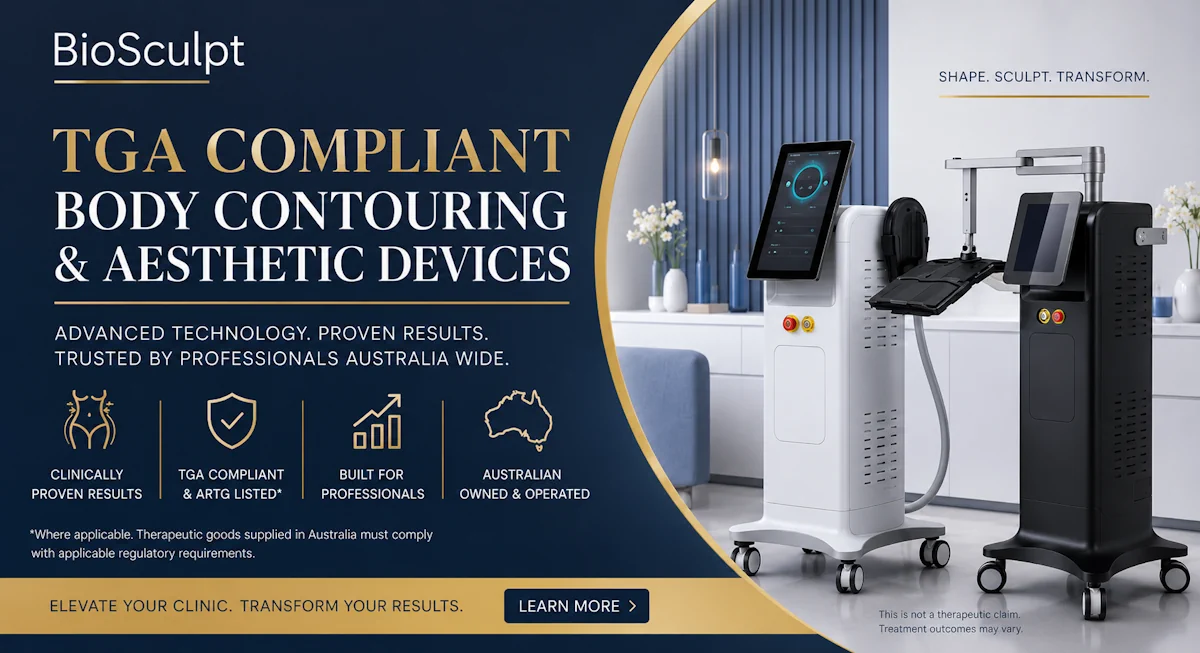
Beauty equipment requires a similar distinction.
Not every beauty machine is a medical device.
Whether equipment falls within the medical-device framework depends on matters including its intended purpose and the claims associated with it.
If equipment is a regulated medical device, TGA and ARTG requirements may apply.
If it is not a medical device, that does not mean it is completely unregulated. Electrical safety, product safety, workplace requirements, radiation regulation and state or territory rules may still apply.
Equipment should therefore be assessed individually rather than relying on statements such as:
“All beauty machines must be TGA registered.”
That statement is too broad.
Common TGA Myths in the Beauty Industry
“All cosmetics need TGA approval.”
Incorrect.
Ordinary cosmetics are generally not therapeutic goods. Their chemical ingredients generally fall within the industrial-chemicals framework administered by AICIS.
“Everything used professionally in a salon is TGA regulated.”
Incorrect.
Professional use does not itself determine regulatory status.
“If it has an ARTG number, I can make any claim I want.”
Incorrect.
Therapeutic-goods advertising remains regulated and claims must comply with applicable requirements.
“If a product is legal overseas, it is legal in Australia.”
Not necessarily.
Australian regulatory requirements must be considered separately.
“CE marked means TGA approved.”
Incorrect.
They relate to different regulatory systems.
“Natural products aren’t regulated.”
Incorrect.
AICIS specifically notes that almost all cosmetic ingredients are regulated as industrial chemicals, including many ingredients described as natural or organic.
“If my supplier makes the claim, I can repeat it.”
Not necessarily.
Businesses remain responsible for the advertising they publish.
A Better Compliance Question
Instead of asking:
“Is this beauty product TGA approved?”
start by asking:
“What type of product is this under Australian law?”
Then establish:
- Is it a cosmetic?
- Is it a therapeutic good?
- Who regulates it?
- What obligations apply to the manufacturer or importer?
- Does it require ARTG inclusion?
- What claims can legally be made?
- Are other product-safety, labelling or state requirements relevant?
This approach is considerably more accurate than assuming every professional beauty product requires TGA approval.
Where to Check Current Information
Australian regulatory requirements can change, and product classification can depend on the particular circumstances.
Beauty businesses should use current information from the relevant government regulator.
Therapeutic Goods Administration
Use the TGA for information about:
- therapeutic goods
- medicines
- medical devices
- ARTG requirements
- therapeutic claims
- therapeutic-goods advertising.
Australian Industrial Chemicals Introduction Scheme
Use AICIS for information about:
- cosmetic ingredients
- industrial chemicals
- importing cosmetics
- manufacturing cosmetics
- chemical introduction categories
- importer and manufacturer registration requirements.
Australian Competition and Consumer Commission
The ACCC provides information about:
- Australian Consumer Law
- consumer product safety
- mandatory standards
- product recalls
- misleading representations.
State and territory authorities may also regulate particular products, ingredients, poisons or professional activities.
Final Takeaway
The TGA plays an important role in Australia’s beauty industry, but describing it as the regulator of all beauty products is inaccurate.
Australia uses different regulatory frameworks for different types of products.
For many ordinary cosmetics, AICIS regulates the introduction of the industrial chemicals used in those products.
For products that meet the definition of therapeutic goods, TGA requirements may apply.
And for salons, manufacturers, importers and suppliers, the claims made about a product can be just as important as what is inside the container.
The safest approach is therefore to identify the regulatory category first and then determine the obligations that apply.
That distinction helps beauty businesses avoid two opposite mistakes:
- unnecessarily treating ordinary cosmetics as TGA-regulated therapeutic goods; and
- marketing or supplying a therapeutic good as though it were simply an ordinary cosmetic.
Important Disclaimer
This article provides general educational information for Australian beauty professionals and businesses. It does not constitute legal or regulatory advice.
The regulatory status of a product can depend on its ingredients, composition, intended purpose, presentation, claims and other circumstances.
Businesses that manufacture, import, supply or advertise beauty products should verify current requirements with the TGA, AICIS, ACCC and other relevant authorities and obtain professional regulatory or legal advice where required.