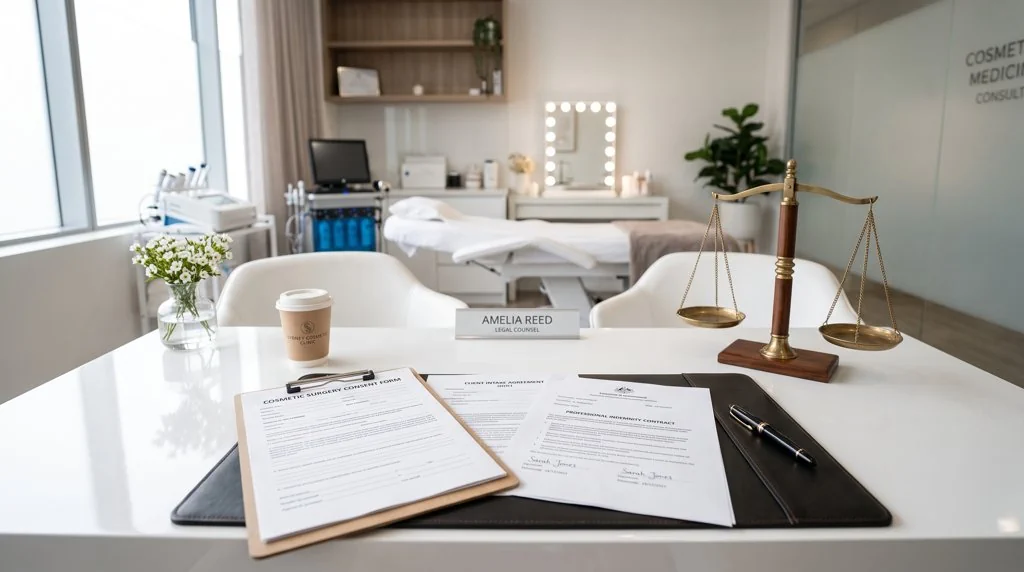
Cosmetic Procedures and the Law in Australia: What Beauty Businesses Need to Know
The Australian beauty and aesthetics industry offers an increasingly diverse range of treatments, from traditional beauty services through to advanced skin treatments, laser and IPL procedures, body-contouring technologies and medical cosmetic procedures.
However, there is no single Australian licence that automatically authorises a person to perform every type of cosmetic treatment.
The rules that apply depend on several factors, including:
- the treatment being performed
- whether a medicine or therapeutic good is involved
- whether the practitioner is a registered health practitioner
- the type of device being used
- the state or territory where the treatment is performed
- local public health and council requirements
- infection-control requirements
- workplace health and safety obligations
- advertising and consumer protection laws.
For salon and clinic owners, understanding these distinctions is essential.
This article provides a general overview of the regulatory framework applying to cosmetic and beauty procedures in Australia. It is not legal advice, and businesses should always check the current requirements applying in their own state or territory before introducing a new treatment.
Not Every Cosmetic Treatment Is Regulated in the Same Way
One of the most important points for beauty business owners to understand is that the term “cosmetic procedure” covers treatments with very different levels of risk and regulation.
A conventional beauty service such as a facial is not regulated in the same way as a prescription cosmetic injectable.
Similarly, treatments such as microneedling, chemical peels, laser hair removal, IPL, skin resurfacing and body-contouring technologies may be subject to different requirements depending on the treatment, equipment, treatment parameters and jurisdiction.
Before adding any new service, a business should therefore determine exactly which regulatory requirements apply to that treatment rather than assuming that the rules applying to another cosmetic service will be the same.
Registered Health Practitioners and Ahpra
The Australian Health Practitioner Regulation Agency — Ahpra — works with the National Boards to regulate health practitioners registered under the Health Practitioner Regulation National Law.
This includes professions such as medical practitioners, nurses, dentists and other registered health professions.
Beauty therapists are not, simply by being beauty therapists, registered health practitioners under the National Registration and Accreditation Scheme.
This distinction becomes particularly important when treatments involve prescription medicines or activities restricted to particular registered health professions.
New Non-Surgical Cosmetic Procedure Guidelines
Significant regulatory changes were introduced in 2025.
From 2 September 2025, new guidelines apply to registered health practitioners performing non-surgical cosmetic procedures.
The guidelines address areas including:
- practitioner competence and scope of practice
- patient suitability
- informed consent
- management of complications
- prescribing and administering cosmetic medicines
- advertising
- infection prevention and control
- facilities
- financial arrangements
- treatment of people under 18.
Importantly, the guidelines do not give a registered health practitioner automatic authority to perform every cosmetic procedure.
Practitioners must still work within their professional scope of practice and possess the education, training, competence, experience and any authorisations required for the procedure concerned.
Medical practitioners are subject to separate Medical Board of Australia guidelines covering cosmetic surgery and procedures.

Cosmetic Injectables Are Different from Ordinary Beauty Treatments
Treatments involving substances such as botulinum toxin and certain injectable products cannot simply be treated as ordinary salon services.
Botulinum toxin products used for cosmetic purposes are prescription-only medicines, and the prescribing, supply and administration of prescription medicines are governed by Commonwealth and state or territory requirements.
Who may prescribe or administer a particular medicine depends on professional registration, prescribing authority, medicines and poisons legislation, scope of practice and other applicable requirements.
For this reason, a short training course or certificate does not by itself give an otherwise unauthorised person the legal authority to prescribe or administer prescription cosmetic medicines.
Businesses considering offering cosmetic injectable services should establish the applicable prescribing, consultation, practitioner, storage, administration, record-keeping and emergency-management requirements before providing the service.
Laser and IPL Treatments
Laser and intense pulsed light treatments are another area where businesses need to be careful about making Australia-wide assumptions.
Australia does not have one uniform national licensing system covering every cosmetic laser and IPL treatment.
Requirements vary between jurisdictions and can depend on factors such as:
- the type and class of equipment
- the purpose of treatment
- the treatment being performed
- the operator
- the premises
- applicable radiation legislation.
Some jurisdictions regulate particular cosmetic laser or radiation practices more extensively than others.
A salon introducing laser, IPL or similar technology should therefore check with the relevant radiation or health authority in the state or territory where the equipment will actually be used.
Training is also an important risk-management consideration even where a particular operator licence is not legally required. Businesses should be able to demonstrate that operators understand the equipment, treatment parameters, contraindications, skin assessment, eye protection, adverse-event management and safe operating procedures relevant to the technology.
Advanced Skin Treatments
Treatments such as microneedling, dermabrasion, advanced chemical peeling and other procedures that disrupt the skin barrier can carry greater infection and injury risks than conventional beauty treatments.
The legal requirements may depend on the depth or intensity of treatment and the jurisdiction in which the business operates.
Beauty businesses should consider:
- whether skin penetration legislation applies
- infection-control requirements
- local council requirements
- practitioner competence and training
- contraindications
- client consultation and informed consent
- safe treatment parameters
- adverse-event procedures
- sharps management where applicable
- cleaning, disinfection and sterilisation requirements
- insurance coverage.
A training certificate demonstrates that education has been completed. It should not be described as a government licence unless it genuinely provides a licence or statutory authorisation.
Skin Penetration and Infection-Control Laws
Many cosmetic treatments involve penetration or intentional disruption of the skin.
States and territories have public health, infection-control or skin-penetration requirements that can apply to businesses performing these procedures.
Depending on the jurisdiction and treatment, requirements may relate to:
- hand hygiene
- personal protective equipment
- environmental cleaning
- cleaning and reprocessing reusable instruments
- management of single-use items
- sharps disposal
- clinical waste
- treatment-room design
- sinks and handwashing facilities
- record keeping
- premises registration or notification.
Local councils may also administer or enforce some requirements.
This is one reason businesses operating in multiple Australian states should not rely on a single local compliance assumption for every location.
The TGA, Therapeutic Goods and Medical Devices
The Therapeutic Goods Administration regulates therapeutic goods supplied in Australia under the national therapeutic goods framework.
However, businesses should avoid assuming that every piece of beauty equipment is automatically a TGA-regulated medical device.
Whether equipment is a medical device depends on matters including its intended purpose and the applicable therapeutic goods legislation.
Where a product is required to be included in the Australian Register of Therapeutic Goods (ARTG), businesses should verify the relevant regulatory status rather than relying solely on statements such as “TGA approved”.
It is also important to distinguish between:
- a product being subject to TGA regulation
- inclusion in the ARTG where required
- the responsibilities of the Australian sponsor
- the manufacturer’s regulatory documentation
- the legal authority of the person operating the device.
The regulatory status of a device does not automatically determine whether a particular person is legally permitted or competent to perform a treatment with it.

Products, Medicines and Safe Storage
Businesses should ensure products are obtained through legitimate supply channels and used according to applicable requirements and manufacturer instructions.
Depending on the product, this may include requirements concerning:
- storage temperature
- expiry dates
- batch or lot information
- product labelling
- handling
- disposal
- adverse-event reporting
- medicine storage and access controls.
Salon owners should be particularly cautious about importing products or equipment directly from overseas without first determining whether Australian regulatory requirements apply.
Client Consultation and Informed Consent
Good consent involves considerably more than obtaining a signature on a form.
Before treatment, clients should receive sufficient information to make an informed decision.
Depending on the procedure, this may include explaining:
- what the treatment involves
- realistic expected outcomes
- material risks and possible complications
- common side effects
- contraindications
- alternative treatment options where appropriate
- recovery or downtime
- aftercare requirements
- circumstances in which treatment should be postponed or refused
- costs and possible additional treatment requirements.
Consent should be obtained before treatment and appropriately documented.
Higher-risk cosmetic procedures require particularly careful consent and suitability processes.
Registered health practitioners performing non-surgical cosmetic procedures must also comply with the specific consent and patient-assessment requirements contained in the applicable National Board guidelines.
Clients Under 18
Businesses should exercise particular care when providing cosmetic procedures to minors.
Specific restrictions can exist under state or territory legislation, and additional requirements apply to registered health practitioners under the Ahpra cosmetic procedure guidelines.
For registered health practitioners covered by the 2025 guidelines, procedures involving people under 18 are subject to additional safeguards, including consideration of capacity and suitability and, in applicable circumstances, cooling-off requirements.
The guidelines state that National Boards consider botulinum toxin and dermal fillers should not be prescribed for cosmetic purposes for people under 18.
Businesses should check the specific law applying to both the procedure and jurisdiction rather than relying solely on parental consent.
Record Keeping
Appropriate records are an important component of professional practice and risk management.
Depending on the treatment, records may include:
- client details
- consultation and medical history
- contraindication screening
- treatment consent
- treatment area
- equipment used
- treatment settings
- products used
- batch or lot numbers where relevant
- before-and-after photographs where consent has been obtained
- practitioner details
- treatment date
- adverse reactions
- aftercare provided
- follow-up communications.
Records must also be managed in accordance with applicable privacy obligations.
Advertising Cosmetic and Beauty Treatments
Advertising is another area in which different legal frameworks can overlap.
Beauty businesses are generally subject to the Australian Consumer Law, which prohibits misleading or deceptive conduct and false or misleading representations.
This means businesses should be able to substantiate claims they make about treatments, products and expected results.
Businesses advertising regulated health services or therapeutic goods may also have additional obligations under the National Law, Therapeutic Goods Act and associated advertising requirements.
Registered health practitioners must comply with the advertising requirements applying to regulated health services.
Additional Ahpra advertising guidelines also apply to higher-risk non-surgical cosmetic procedures.
Businesses should therefore be cautious with claims such as:
- “guaranteed results”
- “completely safe”
- “risk free”
- “permanent results”
- “clinically proven” without appropriate evidence
- exaggerated before-and-after representations.
Advertising should accurately represent what a treatment can reasonably achieve and should not minimise risks or create unrealistic expectations.
Testimonials Require Particular Care
Testimonials are not governed by exactly the same rules in every part of the beauty industry.
For ordinary beauty services, testimonials must still comply with Australian Consumer Law and must not be fake, misleading or deceptive.
However, advertising a regulated health service is subject to additional restrictions under the National Law, including restrictions concerning testimonials about clinical aspects of regulated health services.
Businesses offering both beauty and regulated health services should therefore ensure their marketing distinguishes between the different regulatory requirements.
Before-and-After Images
Before-and-after photographs can be useful educational and marketing tools, but they must not create a misleading impression of likely treatment outcomes.
Businesses should use genuine images with appropriate consent and avoid manipulating images in ways that exaggerate results.
Lighting, angle, facial expression, camera settings and presentation should be reasonably consistent where images are being presented as evidence of a treatment result.
Registered health practitioners advertising higher-risk cosmetic procedures should also follow the specific Ahpra advertising requirements applying to this type of content.
Workplace Health and Safety
Beauty and cosmetic businesses also have responsibilities under workplace health and safety legislation.
Risk management may need to address matters such as:
- electrical equipment
- laser and IPL hazards
- chemical exposure
- hazardous substances
- sharps
- manual handling
- infection risks
- personal protective equipment
- emergency procedures
- staff training.
Business owners should maintain documented procedures appropriate to the treatments and equipment used in their workplace.
Emergency and Adverse-Event Procedures
The higher the treatment risk, the more important it becomes to have an appropriate plan for complications.
Businesses should consider foreseeable adverse events associated with each service and establish procedures explaining what staff should do if they occur.
This may include:
- stopping treatment
- providing appropriate first aid
- escalating to an appropriately qualified health practitioner
- contacting emergency services where necessary
- documenting the incident
- communicating with the client
- reporting an adverse event where legally required
- reviewing the incident before treatment recommences.
Staff should understand the limits of their own competence and when a client requires medical assessment.
Professional Indemnity and Public Liability Insurance
Legal permission to perform a treatment and insurance coverage are separate issues.
A treatment may not be specifically prohibited, but that does not automatically mean an insurer will cover it.
Before introducing a new service, businesses should confirm in writing that their insurance policy covers:
- the specific procedure
- the practitioner performing it
- the equipment being used
- the premises or mobile treatment environment
- the practitioner’s level of training.
Do not assume that a general beauty insurance policy automatically covers every advanced cosmetic treatment.
Training, Accreditation and Legal Authority Are Different Things
This distinction is particularly important in the beauty industry.
Completing professional education can demonstrate training and competency development, but a course certificate or CPD accreditation does not override legislation.
Where legislation restricts a treatment, medicine, device or activity to particular practitioners, completing a short course does not remove that restriction.
Conversely, the absence of a government licensing requirement does not mean training is unnecessary.
Training, legal authority, professional scope, insurance requirements and workplace competency are related issues, but they are not interchangeable.
Local Council and Premises Requirements
Beauty businesses should also check whether their local council has requirements applying to their premises or activities.
Depending on the jurisdiction and services offered, requirements may relate to:
- skin-penetration premises
- hygiene facilities
- waste disposal
- plumbing and handwashing facilities
- planning or zoning
- business registration or notification
- environmental health inspections.
Requirements can differ even when businesses provide similar services.
A Practical Compliance Check Before Introducing a New Treatment
Before adding a cosmetic or advanced beauty treatment to your menu, ask:
- What exactly is the treatment?
Identify the procedure, products, equipment and treatment parameters. - Is a prescription medicine involved?
If so, establish who may lawfully prescribe, supply and administer it. - Is the practitioner appropriately authorised?
Check registration, scope of practice and any state or territory restrictions. - Does state or territory legislation regulate the procedure or equipment?
Check health, radiation, medicines and skin-penetration requirements. - Does the equipment have Australian regulatory requirements?
Determine whether it is a medical device and whether ARTG inclusion or other requirements apply. - Are the premises compliant?
Check state, territory and local council requirements. - Is the practitioner appropriately trained and competent?
Training should be relevant to the actual procedure and equipment being used. - Does your insurance cover the treatment?
Obtain confirmation rather than assuming. - Are consultation, consent and treatment records adequate?
- Do you have appropriate infection-control and emergency procedures?
- Is your advertising compliant?
Consider Australian Consumer Law, therapeutic goods advertising requirements and Ahpra requirements where applicable. - Do you have a system for checking regulatory changes?
Cosmetic treatment regulation continues to evolve.
Where Should Beauty Businesses Check?
Because requirements can change, businesses should verify information through the relevant regulator rather than relying exclusively on training providers, equipment suppliers or social media.
Useful authorities can include:
- Australian Health Practitioner Regulation Agency (Ahpra) and the relevant National Board
- Therapeutic Goods Administration (TGA)
- Australian Competition and Consumer Commission (ACCC)
- the relevant state or territory health department
- the relevant state or territory radiation regulator
- local council or environmental health department
- the business’s professional indemnity and public liability insurer.
The Key Principle
There is no single answer to the question:
“Am I legally allowed to perform cosmetic treatments in Australia?”
The correct question is:
“What requirements apply to this particular treatment, performed by this practitioner, using this product or device, in this Australian state or territory?”
That distinction can prevent many of the compliance problems encountered by beauty and cosmetic businesses.
Australia’s beauty industry includes both relatively low-risk services and increasingly sophisticated cosmetic technologies. As treatment complexity increases, businesses need to pay greater attention to practitioner competence, regulatory boundaries, infection control, informed consent, equipment and product compliance, insurance and emergency management.
A professional course can form an important part of competency development, but education should always operate alongside — rather than replace — the legal and regulatory requirements applying to the treatment.
Important Disclaimer
This article provides general educational information for Australian beauty and cosmetic businesses and does not constitute legal, medical or regulatory advice.
Requirements vary according to the treatment, practitioner, equipment, products and Australian state or territory. Regulations and professional guidelines can also change.
Before introducing a new cosmetic procedure, businesses should confirm current requirements with the relevant Commonwealth, state or territory regulator, local authority, professional body and insurer.