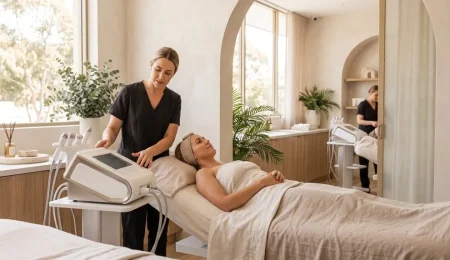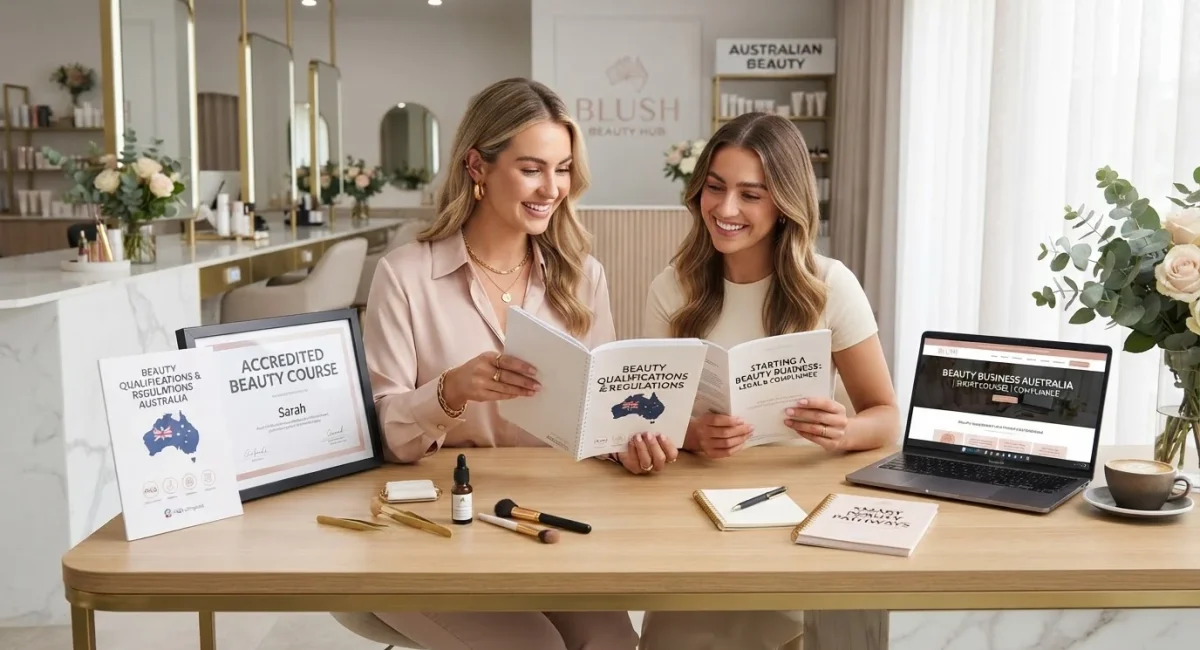
Do You Need a Full Beauty Qualification? Accredited Short Courses, Starting a Beauty Business and Understanding the Rules in Australia
The Australian beauty industry provides an unusually wide range of pathways for people wanting to establish their own business.
Some people want a traditional career as a beauty therapist, working across facials, massage, waxing, skin treatments and other salon services.
Others have a much narrower goal.
They may want to operate a lash studio two days a week, provide teeth whitening as a mobile service, specialise in brows, establish a nail business, add spray tanning to an existing hair salon or introduce a particular body-contouring technology into an established beauty business.
This leads to an important question:
Do you need to complete a full Certificate or Diploma of Beauty Therapy before starting a beauty business in Australia?
In many cases, no.
But that does not mean training is unnecessary, nor does it mean that every treatment can be performed simply because someone has completed a short course.
The answer depends on:
- the treatment being performed
- how invasive it is
- the products being used
- the equipment being used
- the state or territory in which the business operates
- local council requirements
- the practitioner’s level of competency
- the requirements of the business’s insurer.
The distinction is important for anyone considering an accredited or professionally recognised short course as an alternative to a broader beauty qualification.
“Unregulated” Does Not Mean “No Rules”
Beauty treatments are sometimes described as “unregulated”.
That term needs to be used cautiously.
Generally, what is meant is that there is no universal Australian occupational licence requiring every practitioner to hold a particular beauty qualification before providing that service.
It does not mean that the business operates outside Australian law.
Depending on the service, a beauty business may still have obligations under:
- Australian Consumer Law
- state and territory public-health legislation
- infection-prevention requirements
- skin-penetration legislation
- local council regulations
- workplace health and safety legislation
- medicines and poisons legislation
- radiation legislation
- therapeutic-goods legislation
- product safety requirements
- advertising laws
- privacy and record-keeping requirements
- insurance policy conditions.
Even relatively low-risk personal appearance services remain subject to general responsibilities around client safety and competent service delivery.
Australian Consumer Law also provides consumer guarantees applying to services, including the requirement that services be provided with due care and skill.
The relevant question is therefore rarely:
“Is this treatment regulated or unregulated?”
A better question is:
“Exactly which rules apply to this treatment, product, device and business in my location?”
Accredited Short Courses and Nationally Recognised Qualifications Are Different
This distinction is particularly important.
Australia has a formal Vocational Education and Training system.
Within that system, an Australian VET accredited course has a particular regulatory meaning. Accredited courses are nationally recognised and are regulated through Australia’s VET framework.
Registered Training Organisations can also deliver nationally recognised qualifications and individual units of competency.
A Certificate III, Certificate IV or Diploma appearing on the National Training Register is therefore different from a privately issued professional-development certificate.
Outside the VET system, private training organisations and professional associations may provide:
- CPD-accredited courses
- industry-accredited courses
- professionally recognised courses
- specialist certificates
- continuing education.
These programs can provide valuable specialist education.
However, industry accreditation or CPD accreditation should not be described as a nationally recognised VET qualification unless it genuinely is one.
This does not automatically make one type of education better than the other.
They serve different purposes.
A Diploma may prepare somebody for a broad occupation.
A specialist course may prepare somebody for a particular treatment.
The important issue is whether the education is suitable for the person’s intended scope of practice.
Why Short Courses Can Make Sense
Consider someone who wants to establish an eyelash-extension business.
They may have no intention of performing massage, advanced facials, body treatments or other traditional beauty-therapy services.
A comprehensive qualification provides valuable breadth, but studying areas that the person never intends to practise can significantly increase the time and financial investment required before launching their business.
A specialist course follows a different model.
It concentrates education on the service being offered.
For a lash-extension practitioner, this might include:
- eye and lash anatomy
- contraindications
- allergies and sensitivities
- adhesives
- consultation
- lash selection
- isolation
- application
- removal
- hygiene
- adverse reactions
- aftercare.
For someone who wants to provide only one or two services, that can be a more proportionate educational pathway.

Treatments That May Lend Themselves to Specialist Training
There are numerous beauty and cosmetic services in Australia where a full Diploma of Beauty Therapy is not automatically a universal occupational licensing requirement.
However, the level of regulation and risk varies considerably between them.
They should therefore not all be placed into the same category.
Lower-complexity specialist beauty services
Services commonly taught through specialist education include:
Eyelash Extensions
Eyelash extensions are frequently offered as a standalone business.
A practitioner needs education in eye-area safety, lash health, adhesive use, allergies, sensitivities, contraindications, application, removal, hygiene and aftercare.
Completing an entire beauty-therapy qualification is not necessarily a universal Australian prerequisite solely for offering lash extensions.
Insurance requirements should still be confirmed before treating clients.
Classic Lash Techniques
Specialist classic-lash education can be suitable for practitioners who intend to work specifically in eyelash extensions rather than across the broader beauty profession.
As with any eye-area service, the practitioner’s actual competency is more important than simply possessing a certificate.
Lash Lifting
Lash lifting involves chemical processing close to the eye.
Specialist education should therefore include:
- client consultation
- product chemistry
- processing times
- contraindications
- sensitivities
- manufacturer instructions
- eye protection
- managing adverse reactions.
Brow Lamination
Brow lamination also relies on chemical processing.
Practitioners need to understand skin and hair condition, chemical timing, contraindications and product-specific instructions.
Eyebrow Mapping
Eyebrow mapping is an example of a comparatively low-risk specialist skill that may be learned independently of an entire beauty qualification.
It can complement brow shaping, tinting, cosmetic tattoo preparation or other brow services.
The treatment actually performed alongside mapping determines whether additional training or regulation applies.
Make-Up Application
Traditional cosmetic make-up application can generally be learned as a specialist discipline.
This should not be confused with cosmetic tattooing or procedures that deliberately penetrate the skin.
Spray Tanning
Spray tanning is another service commonly offered independently.
Training should include appropriate product use, contraindications, ventilation, client preparation, application and aftercare.
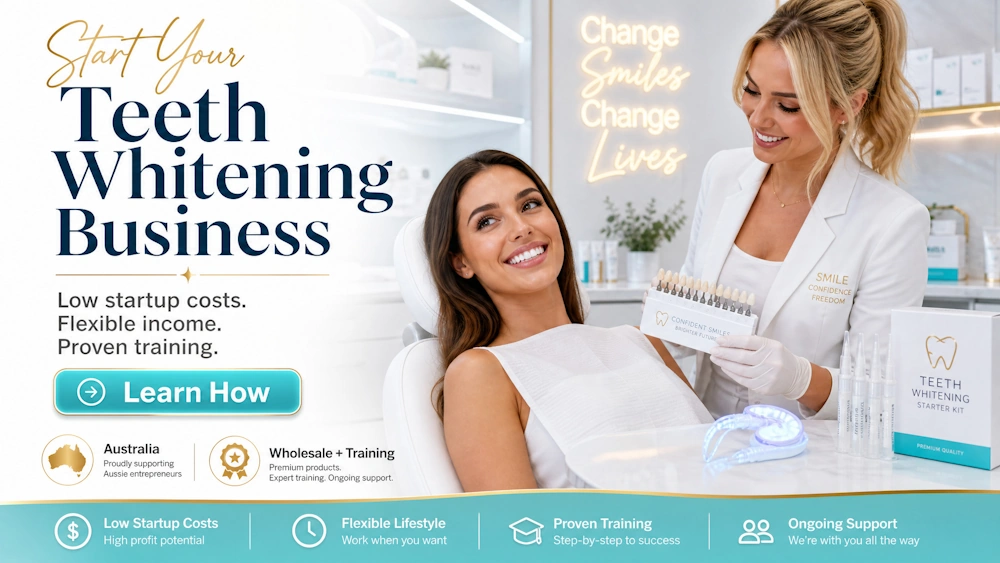
Teeth Whitening
Teeth whitening is a particularly useful example of why the expression “unregulated treatment” can be misleading.
Cosmetic teeth whitening may be offered outside a dental practice within limits, but the products used are subject to Australian controls.
The Dental Board of Australia states that only registered dental practitioners may use or supply teeth-whitening products containing more than 6% hydrogen peroxide or more than 18% carbamide peroxide.
Those thresholds matter.
A non-dental beauty or cosmetic practitioner cannot use a short-course certificate to override restrictions applying to higher-concentration whitening products.
Appropriate teeth-whitening education should therefore cover more than simply applying whitening gel.
It should include:
- tooth and oral anatomy
- client consultation
- suitability screening
- contraindications
- existing dental conditions
- peroxide concentration
- product safety
- gum and soft-tissue protection
- sensitivity
- treatment timing
- adverse reactions
- infection control
- aftercare
- referral to a dental practitioner when appropriate.
A cosmetic practitioner should also understand the boundary between providing a cosmetic service and diagnosing or treating dental disease.
Clients displaying concerns such as untreated decay, significant gum disease, oral lesions, unexplained pain or other dental problems may require assessment by a registered dental practitioner before cosmetic whitening is considered.
Training therefore assists the practitioner to understand both what they can do and when they should not proceed.
Tooth Gems
Tooth gems have become increasingly popular as a cosmetic service and are another area where specialist training may be appropriate.
However, practitioners should be cautious about treating tooth-gem application as completely equivalent to applying jewellery to the skin.
The service involves the oral environment and dental enamel.
Training should appropriately address:
- tooth anatomy
- oral hygiene
- client suitability
- contraindications
- infection prevention
- adhesive systems
- product suitability
- placement
- isolation
- aftercare
- avoiding damage to enamel
- when referral to a dental practitioner is required.
Practitioners should not diagnose dental conditions, remove tooth structure or undertake activities reserved for registered dental practitioners merely because they have completed a cosmetic tooth-gem course.
Insurance acceptance should also be specifically confirmed.
Traditional Facial Treatments
Basic cosmetic facial treatments are another area where specialist training can be useful.
These may include:
- cleansing
- exfoliation
- cosmetic masks
- facial massage
- hydrating treatments
- superficial cosmetic treatments
- certain non-invasive beauty technologies.
A dedicated facial course may therefore be appropriate for someone establishing a facial-only business.
However, the term “facial” covers an enormous range of procedures.
There is an important difference between:
- applying cosmetic skincare products
and
- deliberately penetrating the skin or using high-energy equipment.
The more invasive or technologically complex the procedure becomes, the more important treatment-specific regulation, training and insurance become.
Facial Massage and Gua Sha
Cosmetic facial massage and gua sha are examples of services that can generally be taught as specialist beauty techniques.
Practitioners should nevertheless understand:
- relevant anatomy
- contraindications
- pressure
- skin conditions
- vascular considerations
- hygiene
- client comfort
- when a treatment should be modified or declined.
It is also important not to make unsupported medical or therapeutic claims about cosmetic services.
Microdermabrasion
Microdermabrasion is a more technical treatment than a traditional facial but is commonly performed within beauty settings.
Specialist education should cover:
- skin anatomy
- skin analysis
- treatment depth
- contraindications
- equipment operation
- suction
- treatment endpoints
- adverse reactions
- hygiene
- aftercare.
Whether additional premises or public-health requirements apply should be checked within the relevant jurisdiction.
Dermaplaning
Dermaplaning requires additional consideration because it involves using a blade against the skin.
Even where a specific beauty qualification is not mandated, infection-control and skin-penetration requirements may become relevant depending on the jurisdiction and exactly how the procedure is performed.
For example, NSW public-health rules specifically regulate a range of beauty procedures capable of penetrating or compromising the skin, and beauty businesses providing skin-penetration procedures must comply with infection-control requirements.
Dermaplaning training should therefore address:
- blade handling
- sharps disposal
- infection prevention
- cross-contamination
- contraindications
- skin conditions
- treatment technique
- adverse events
- post-treatment care.
A practitioner should check their local requirements before commencing this service.
Microneedling
Microneedling belongs in a distinctly different risk category from lash extensions or brow mapping.
The treatment deliberately creates controlled skin penetration.
That means public-health and infection-control legislation can apply.
Rules also differ between jurisdictions.
For example, Victoria specifically recognises microneedling within skin-penetration activities, while NSW regulates businesses undertaking procedures involving penetration of the skin.
A practitioner cannot therefore assume that because microneedling is widely available within beauty businesses, it has no regulatory requirements.
Before offering microneedling, practitioners should investigate:
- state or territory skin-penetration legislation
- council registration or notification requirements
- premises requirements
- infection-control obligations
- sharps management
- sterile/single-use equipment requirements
- appropriate treatment depth
- insurer requirements.
Microneedling education should be comprehensive and include anatomy, wound healing, contraindications, infection control, client selection, treatment endpoints, post-inflammatory pigmentation risk, adverse reactions and referral.
Hair-Loss Microneedling and LED
Combining scalp microneedling with LED introduces another important issue: the claims being made about the treatment.
Providing a cosmetic scalp service is not necessarily the same as diagnosing or treating a medical cause of hair loss.
Hair loss can have numerous underlying causes.
A beauty practitioner should remain within their training and professional scope and refer clients for appropriate health assessment where necessary.
Businesses also need to be cautious about advertising.
Products and devices may fall within Australia’s therapeutic-goods framework depending upon their intended purpose, presentation and claims.
A treatment advertised merely around cosmetic appearance may therefore sit differently from a device or service promoted as treating a medical condition.
LED Phototherapy
LED treatments provide a good example of why equipment-based beauty services must be considered individually.
The relevant questions are not simply:
“Can a beauty therapist use LED?”
They include:
- What device is being used?
- What is its intended purpose?
- What claims are being made?
- Is it a cosmetic or therapeutic device?
- Is it being used according to manufacturer instructions?
- Does the insurer cover that device and treatment?
The Therapeutic Goods Administration explains that whether a product is considered cosmetic or therapeutic can depend on matters including its intended purpose, ingredients, method of use and the claims made about it.
Where a device or product is a therapeutic good, additional regulatory requirements can apply.
Radiofrequency Skin Tightening
Non-invasive radiofrequency is widely used for cosmetic facial and body treatments.
It is an example of a service for which specialist equipment training can be particularly important.
Appropriate education should cover:
- tissue interaction
- equipment settings
- treatment endpoints
- temperature monitoring
- contraindications
- implanted electronic devices
- client screening
- burns and adverse events
- manufacturer protocols
- maintenance
- documentation.
A certificate alone should never be regarded as authority to use any RF device at any setting for any purpose.
The practitioner must be trained for the particular technology and treatment being provided and should confirm insurance coverage.
Fat Cavitation
Ultrasound cavitation is commonly included within cosmetic body-contouring education.
Training should include:
- relevant anatomy
- device operation
- client screening
- contraindications
- treatment areas
- equipment parameters
- client records
- aftercare
- adverse-event procedures.
Operators should also be cautious about medical claims.
A cosmetic body-contouring service should not automatically be advertised as treating disease or medical conditions simply because a device manufacturer uses therapeutic terminology.
Cryolipolysis or Fat Freezing
Cryolipolysis involves controlled cooling of tissue and therefore carries different risks from a cosmetic massage or traditional beauty service.
Specialist training should include:
- tissue response to cooling
- client selection
- contraindications
- applicator placement
- temperature and device protocols
- skin assessment
- adverse effects
- aftercare
- equipment maintenance.
Insurance should specifically name or accept cryolipolysis rather than the practitioner assuming it falls under generic “beauty treatments”.
Lipo Laser or Low-Level Light-Based Body Treatments
Low-level light-based body-contouring technologies are also available in the beauty sector.
Here again, the specific equipment matters.
Practitioners should determine:
- exactly what technology the device uses
- its regulatory status
- its intended purpose
- manufacturer requirements
- contraindications
- insurance eligibility.
The word “laser” in a commercial product name should not be relied upon to determine the legal classification of equipment.
This is particularly important because certain lasers are separately regulated in some Australian jurisdictions.
Laser and IPL Require Separate Consideration
Laser should not simply be grouped with ordinary beauty equipment.
Requirements vary between Australian states and territories.
Queensland, for example, requires an appropriate licence to use specified laser apparatus for cosmetic purposes and has approved training requirements associated with cosmetic laser use.
A general online beauty certificate does not replace those statutory requirements.
Anyone considering laser or IPL should therefore investigate their jurisdiction independently rather than assuming that rules applying to LED, RF or another beauty device also apply to laser.
Vacuum Therapy
Vacuum-based cosmetic treatments may also be learned through specialist education.
Training should appropriately address:
- pressure settings
- tissue response
- contraindications
- bruising
- vascular conditions
- treatment areas
- equipment operation
- client monitoring.
As with other device-based services, the specific equipment, purpose and insurer requirements matter.
Wood Therapy
Wood therapy is generally a manually performed body-treatment technique rather than a high-energy device procedure.
A practitioner should nevertheless understand anatomy, contraindications, appropriate pressure, bruising risk and client suitability.
Claims should remain consistent with the cosmetic nature of the service unless there is a lawful basis for making therapeutic claims.
HIEMT Body Toning
High-intensity electromagnetic technologies used for cosmetic muscle stimulation or body-toning purposes require device-specific education.
Training should address:
- technology
- client screening
- contraindications
- implanted devices
- treatment positioning
- equipment settings
- treatment protocols
- adverse-event procedures.
The legal and regulatory position can also depend upon what the particular device is intended and advertised to do.
A device marketed purely for cosmetic purposes may have different regulatory considerations from a device supplied or promoted for therapeutic purposes.
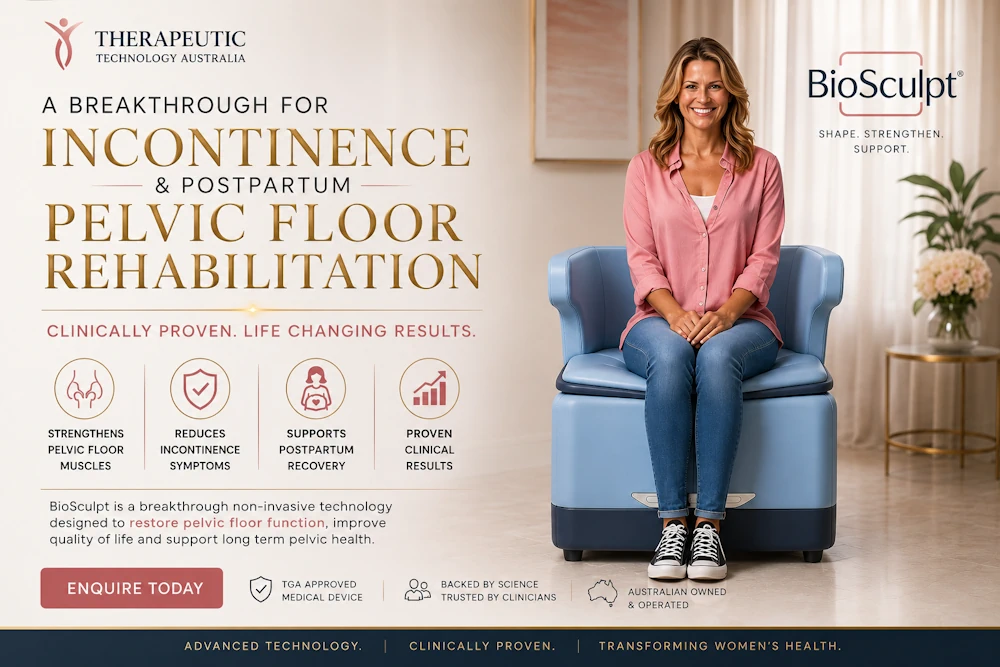
Pelvic-Chair Technology
Pelvic-chair devices require particular caution because they may be promoted in connection with pelvic-floor function, urinary incontinence or other health-related outcomes.
These claims can move the discussion beyond ordinary cosmetic beauty services.
Where equipment is intended to diagnose, prevent, monitor, treat or alleviate a medical condition, therapeutic-goods requirements may become relevant.
The TGA advises that the classification of products can depend upon their intended purpose and the claims being made.
A practitioner considering a pelvic-chair service should therefore establish:
- the regulatory status of the particular device
- its intended purpose
- whether it is entered on the ARTG where required
- who the manufacturer says may operate it
- whether the proposed service falls within the practitioner’s competence
- whether the insurer accepts the treatment
- what claims may legally be made when advertising it.
A generic beauty training certificate should not be treated as a substitute for this due diligence.
Body Contouring as a Category
Body contouring is not a single treatment.
It can include combinations of:
- radiofrequency
- ultrasound cavitation
- vacuum therapy
- cryolipolysis
- low-level light technologies
- electromagnetic muscle stimulation
- manual techniques.
The risk profile therefore depends on the technology used.
A comprehensive body-contouring course can provide valuable theoretical foundations, but practitioners should still receive appropriate training for each device they actually operate.
A Useful Way to Think About Beauty Treatments
Rather than dividing every treatment into simply “regulated” and “unregulated”, it is more useful to think of them on a spectrum.
Category 1 — Lower-risk cosmetic services
Examples may include:
- eyebrow mapping
- traditional make-up
- spray tanning
- lash extensions
- lash lifting
- brow lamination
- cosmetic facial massage
- gua sha.
Specialist training may be a practical pathway for these services, subject to insurance and local requirements.
Category 2 — Cosmetic services requiring greater technical knowledge
Examples may include:
- teeth whitening within permitted product limits
- tooth gems
- microdermabrasion
- advanced cosmetic facials
- LED phototherapy
- RF treatments
- body contouring
- cavitation
- vacuum therapy
- cryolipolysis
- HIEMT
- low-level light-based body treatments.
A full beauty Diploma may still not be universally mandated, but device-specific training, contraindication knowledge, insurer approval and regulatory checking become increasingly important.
Category 3 — Skin-penetration services
Examples can include:
- microneedling
- scalp microneedling
- cosmetic tattooing
- certain piercing procedures
- other treatments deliberately penetrating the skin.
These can trigger specific public-health, infection-control, premises, council and record-keeping obligations.
NSW, for example, regulates skin-penetration businesses and requires operators to comply with specific infection-control requirements.
Victoria also regulates beauty and skin-penetration premises under its public-health framework.
Category 4 — Treatments subject to specific professional or statutory controls
Examples can include:
- cosmetic injectables involving prescription medicines
- higher-concentration professional teeth whitening
- certain cosmetic laser procedures
- procedures restricted to registered health practitioners.
A private short course cannot override legislation applying to these treatments.
The Cost–Benefit Question
One of the strongest arguments for specialist education is proportionality.
Imagine two prospective business owners.
Business Owner A
Wants to build a career as a comprehensive beauty therapist and eventually offer:
- facials
- waxing
- massage
- skin services
- lash and brow treatments
- body treatments
- salon management.
For this person, a comprehensive nationally recognised beauty qualification may represent excellent value.
The broader education is directly relevant to their intended career.
Business Owner B
Already works full-time and wants to establish a small weekend lash business.
They intend to provide only:
- classic lash extensions
- lash lifting
- brow lamination.
For this person, undertaking an entire beauty qualification may represent substantially more education, expense and time than their initial business model requires.
A combination of well-designed specialist courses may be more proportionate.
Neither person has chosen the “better” education.
They have chosen education appropriate to different objectives.
Short Courses: Potential Benefits
Specialist education can offer several advantages.
It can:
- lower the initial financial barrier to starting a business
- shorten the learning pathway for a specific treatment
- allow practitioners to specialise
- make part-time businesses more achievable
- enable an existing salon to introduce an additional service
- allow practitioners to build their education progressively
- reduce expenditure on treatments they do not intend to provide
- provide continuing professional development for existing practitioners.
For someone testing a business concept, this can materially reduce start-up risk.
But Course Cost Is Only One Part of Start-Up Cost
The cheapest course does not necessarily produce the cheapest business.
A prospective practitioner should consider the complete cost of entering the treatment category.
That may include:
Education
Course fees, practical training and continuing education.
Equipment
Treatment beds, machines, lamps, handpieces, tools, consumables or other specialist equipment.
Insurance
Public liability, professional indemnity and treatment liability where applicable.
Premises
Rent, home-business requirements, sinks, flooring, fit-out or council registration.
Infection control
Disposable supplies, sharps containers, cleaning products and sterilisation equipment where required.
Products
Initial inventory and ongoing consumables.
Compliance
Licences, registrations or required competency units.
Marketing
Website, booking software, signage and advertising.
A $200 training course for a service requiring a $20,000 machine is clearly a different commercial proposition from a $200 course for a service requiring a few hundred dollars of supplies.
The relevant calculation is therefore:
Total start-up investment ÷ realistic treatment profit = approximate number of clients required to recover the initial investment.
That is a far more useful business calculation than comparing course fees alone.
Limitations of Short Courses
Short courses have genuine limitations.
A course teaching one treatment cannot reasonably provide the same breadth of education as a comprehensive qualification.
A short-course graduate may therefore have less education in areas such as:
- broad anatomy and physiology
- skin science
- multiple treatment modalities
- salon operations
- treatment planning
- client management
- broader contraindication knowledge.
This does not necessarily prevent them from becoming highly competent within their specialisation.
It simply means they should recognise the boundaries of that specialisation.
A lash technician should not assume that completing a lash course makes them competent to perform microneedling.
A teeth-whitening practitioner should not diagnose dental disease.
A body-contouring technician should not assume their training qualifies them to provide medical treatment.
A microneedling practitioner should not assume they can perform cosmetic injectables.
Scope matters.
What Should a Quality Short Course Include?
A certificate alone is not a meaningful measure of competence.
Prospective students should examine what is actually taught.
Depending on the treatment, a quality program should appropriately address:
- anatomy and physiology
- treatment theory
- consultation
- contraindications
- client selection
- infection prevention
- hygiene
- products and equipment
- treatment protocols
- manufacturer instructions
- treatment endpoints
- adverse reactions
- when not to treat
- referral
- informed consent
- client records
- aftercare
- professional boundaries
- insurance considerations
- relevant legal obligations.
For practical treatments, students should also consider how competency is assessed.
Online Training: The Important Distinction
The debate around online beauty education is sometimes oversimplified.
The important issue is not merely whether theory is delivered through a computer.
Anatomy, contraindications, consultation, legislation, treatment theory, product knowledge and many other subjects can clearly be studied online.
The more relevant question is:
How does the course establish that the learner can safely apply that knowledge in practice?
Different treatments require different levels of practical competency.
An eyebrow-mapping course presents a very different practical risk from microneedling.
A good training model should reflect that difference.
Insurers may also have their own requirements regarding practical assessment, case studies or accepted training providers.
Insurance: The Issue Every New Practitioner Should Check First
Insurance is one of the most important practical considerations when deciding whether a short course is suitable.
The absence of a government-mandated qualification does not mean an insurer is required to cover somebody.
An insurer can set its own underwriting requirements.
It may require:
- specified training
- a particular type of accreditation
- practical assessment
- case studies
- prior industry experience
- manufacturer training
- particular infection-control education.
This means a prospective student should ideally investigate insurance before enrolling in a course or buying expensive equipment.
Public Liability, Professional Indemnity and Treatment Liability
Beauty-business owners commonly encounter several types of insurance.
Public Liability
Public liability generally relates to claims arising from injury or property damage associated with business activities.
For example, a client might trip over equipment in the treatment room.
Professional Indemnity
Professional indemnity may respond to claims relating to professional advice or services.
Treatment Liability
Depending on the insurer and policy structure, treatment-related claims may be specifically covered or incorporated into professional indemnity.
The terminology differs between insurers.
The policy wording matters more than the title of the insurance product.
Questions to Ask Your Insurer
Before commencing a service, ask:
- Is this exact treatment covered?
- Is my particular qualification or course accepted?
- Is online education accepted?
- Is practical assessment required?
- Is the treatment covered in a home salon?
- Is mobile treatment covered?
- Is my particular machine covered?
- Are burns covered?
- Are allergic reactions covered?
- Are skin-penetration procedures covered?
- Are teeth-whitening treatments covered?
- Are tooth gems covered?
- Are microneedling treatments covered?
- Is cosmetic body contouring covered?
- Are there maximum treatment depths or equipment settings?
- Are particular products excluded?
- Are treatments on clients under 18 excluded or restricted?
- What consent and record keeping does the insurer require?
- Do I need to notify the insurer whenever I add a treatment?
- Do I need separate cover for equipment?
Where possible, obtain confirmation in writing.
Teeth Whitening and Insurance
Teeth whitening deserves particular attention.
Practitioners should tell the insurer:
- that they provide cosmetic teeth whitening
- the peroxide concentration used
- whether the service is mobile, home-based or salon-based
- what training they have completed
- what equipment is used.
The Dental Board’s peroxide limits should also be understood independently of insurance.
An insurer accepting a treatment does not authorise someone to use a product prohibited to them by law.
Conversely, a product being legally available does not guarantee that an insurer will cover the practitioner using it.
These are separate questions.
Device-Based Treatments and Insurance
The same principle applies to equipment such as:
- RF
- cavitation
- cryolipolysis
- HIEMT
- pelvic-chair systems
- LED
- vacuum therapy.
Do not simply ask an insurer:
“Am I covered for beauty treatments?”
Provide the actual treatment and device details.
Technology changes quickly, and insurers may treat different equipment categories differently.
Medical and Therapeutic Claims
There is another issue increasingly relevant to modern beauty businesses.
A service may begin as a cosmetic service but be marketed using claims such as:
- treats incontinence
- treats hair loss
- reduces pain
- treats acne
- treats medical conditions
- rehabilitates muscles
- improves a diagnosed disorder.
Those claims can potentially alter the regulatory position of the products or devices being advertised.
The TGA explains that whether something is a cosmetic or therapeutic good can depend upon its ingredients, intended purpose, method of use and claims.
Businesses offering technologically advanced cosmetic treatments should therefore be particularly careful about copying medical claims from overseas websites, manufacturers or social media.
Location Matters
Australia does not have one completely uniform set of beauty-service rules.
A practitioner operating in Queensland may face different requirements from one operating in NSW or Victoria.
For example, Queensland regulates personal appearance services through its public-health framework. Businesses providing designated higher-risk personal appearance services require licensing, and operators providing those services must hold the prescribed infection-control competency.
NSW regulates skin-penetration businesses and requires compliance with specific public-health and infection-control requirements.
Victoria requires registration of premises conducting beauty therapy, cosmetic application and skin-penetration activities under its public-health framework.
The fact that a treatment is being performed widely on Instagram does not establish its legal requirements.
Check the relevant authority.
Home Salons Are Still Businesses
Another common misconception is that regulations apply only to commercial salons.
Operating from a spare bedroom, converted garage or home studio does not automatically exempt a business from:
- council requirements
- public-health obligations
- planning requirements
- infection-control requirements
- insurance requirements
- consumer law.
Similarly, mobile practitioners may have different practical requirements but are not automatically exempt from applicable law.
A Practical Guide to Different Treatment Categories
| Treatment | Can specialist education potentially be appropriate? | Important additional considerations |
|---|---|---|
| Eyebrow mapping | Yes | Technique, hygiene, scope |
| Brow lamination | Yes | Chemical safety, contraindications, insurance |
| Lash lifting | Yes | Eye safety, chemistry, contraindications |
| Eyelash extensions | Yes | Adhesives, allergies, eye safety, insurance |
| Classic lash extensions | Yes | Practical competency, adhesive safety |
| Spray tanning | Yes | Product safety, ventilation, contraindications |
| Make-up | Yes | Hygiene, cross-contamination |
| Cosmetic facial massage | Yes | Anatomy, contraindications |
| Gua sha | Yes | Anatomy, skin/vascular contraindications |
| Basic facials | Yes | Skin analysis, contraindications |
| Hydrating facials | Yes | Products, skin suitability |
| Microdermabrasion | Potentially | Equipment competency, contraindications, insurance |
| Dermaplaning | Potentially | Blade/sharps safety, infection control, jurisdiction |
| Teeth whitening | Potentially | Peroxide limits, oral screening, insurance |
| Tooth gems | Potentially | Oral environment, enamel, insurer acceptance |
| LED phototherapy | Potentially | Device status, intended purpose, claims |
| Radiofrequency | Potentially | Device-specific training, heat/burn risk |
| Cavitation | Potentially | Equipment competency, contraindications |
| Vacuum therapy | Potentially | Pressure, bruising, vascular contraindications |
| Wood therapy | Potentially | Anatomy, pressure, bruising risk |
| Cryolipolysis | Potentially | Cooling injury, equipment, client screening |
| Lipo/low-level light devices | Potentially | Actual technology and device classification |
| HIEMT body toning | Potentially | Device-specific training and contraindications |
| Pelvic-chair technology | Requires additional due diligence | Device status, therapeutic claims, scope and insurer |
| Microneedling | Requires substantially greater due diligence | Skin penetration, infection control, council/state requirements |
| Hair-loss microneedling | Requires substantially greater due diligence | Skin penetration plus scope around hair-loss conditions |
| Cosmetic tattooing | Higher regulatory burden | Skin penetration, infection control, local requirements |
| IPL | Jurisdiction/device dependent | Specific regulatory and insurance checks |
| Cosmetic laser | Jurisdiction-specific regulation | Licensing may apply |
| Cosmetic injectables | Health-professional framework | Prescription medicines and registered practitioners |
This table is a general educational guide, not a statement that every person in every Australian jurisdiction may perform every listed service.
When Does a Full Qualification Make More Sense?
A Certificate or Diploma can be the better investment when someone wants:
- a career as a broadly skilled beauty therapist
- employment within traditional salons or spas
- comprehensive foundational knowledge
- experience across multiple treatment categories
- nationally recognised credentials
- maximum flexibility when changing employers
- a pathway into further formal education.
A comprehensive qualification also provides structured exposure to areas a specialist practitioner might otherwise have to study separately.
For someone planning a long career across the industry, that breadth can be extremely valuable.
When Can Short Courses Make More Sense?
Specialist education may be attractive when someone:
- wants to establish a side business
- wants to specialise in one service
- already owns a related business
- wants to add a treatment to an existing salon
- is testing the commercial viability of a service
- does not intend to become a full-service beauty therapist
- wants to continue developing skills progressively.
Examples might include:
A hairdresser adding brow lamination.
A make-up artist adding lash services.
A dental-industry professional undertaking additional cosmetic-whitening education appropriate to their role.
A beauty therapist adding RF or body contouring.
A new business specialising entirely in lashes.
A person establishing a cosmetic teeth-whitening business within the applicable product limitations.
The appropriate education depends on the service.
Short Courses Are Not a Shortcut Around Regulation
This is perhaps the most important point.
A short course can provide education.
It cannot change legislation.
If a treatment requires:
- a licence
- registration
- a registered health practitioner
- a specific infection-control qualification
- council approval
- an authorised medicine
- an approved training pathway
- a particular radiation licence
then a private certificate does not remove that requirement.
The role of good education is to help practitioners understand those boundaries, not circumvent them.
Equally, More Education Is Not Automatically a Legal Requirement
The reverse misconception should also be avoided.
Recommending comprehensive education is reasonable.
Telling someone they legally require a Diploma of Beauty Therapy for every beauty service when no such universal requirement exists is not.
Australia’s beauty sector supports both broad occupational education and specialist education.
The appropriate pathway depends on:
service + risk + jurisdiction + equipment + insurance + intended professional scope.
Before You Enrol in a Beauty Course
Ask the training provider:
What exactly will I receive?
Is it:
- nationally recognised training
- a Statement of Attainment
- an industry-accredited certificate
- CPD accreditation
- a private certificate of completion?
Know the difference.
What will I learn?
Ask to see the course curriculum.
How is competency assessed?
Particularly for higher-risk treatments.
Can I obtain insurance?
Do not accept a vague statement that the course is “insurable”.
Ask which insurers may consider it, then contact insurers yourself.
Are there additional legal requirements?
A responsible training provider should encourage students to check their state, territory and local requirements.
Is the equipment included in the training?
This is especially important for device-based procedures.
Before You Buy a Beauty Machine
Ask:
- What technology does it actually use?
- Who manufactured it?
- What is its intended purpose?
- Does it make therapeutic claims?
- Does it require ARTG inclusion?
- Is it legally supplied in Australia?
- Are there state licensing requirements?
- Who can legally operate it?
- Does the manufacturer provide operator training?
- Will my insurer cover the exact model?
- What contraindications apply?
- What maintenance and servicing are required?
A course certificate cannot turn inappropriate or non-compliant equipment into appropriate equipment.
Before You Open Your Doors
A sensible pathway for a new beauty-business owner is:
1. Decide exactly which service you want to provide.
Then:
2. Investigate its regulatory position in your state or territory.
3. Check local council requirements.
4. Investigate appropriate education.
5. Contact insurers and confirm that the proposed training is acceptable.
6. Complete the training and competency requirements.
7. Purchase appropriate products and equipment.
8. Establish consultation, consent, contraindication and record systems.
9. Establish infection-control procedures.
10. Confirm your advertising claims are appropriate.
11. Obtain the required insurance.
12. Begin treating clients within your demonstrated scope of competence.
This order can prevent an expensive mistake.
The Real Cost Versus Benefit
The decision should not be framed as:
“Should I spend $200 on a short course or thousands on a qualification?”
That comparison is incomplete.
The better questions are:
What business am I actually trying to build?
How many services do I want to provide?
What education will make me competent in those services?
What does the law require?
What does my insurer require?
How much will the entire business cost to establish?
What opportunities will my chosen education give me in five years?
Someone wanting to provide one specialist service may obtain poor value from studying dozens of unrelated treatments.
Someone wanting a lifelong career as a comprehensive beauty therapist may obtain poor value from repeatedly completing isolated short courses without ever developing broader foundational knowledge.
Both pathways can make sense.
Context determines which provides greater value.
The ABA Position: Education Should Match Scope and Risk
The Australian Beauty Association supports informed professional education.
That does not require claiming that every practitioner needs the longest available qualification.
Nor should the beauty industry encourage people to provide complex treatments after inadequate training simply because a particular occupation is not nationally licensed.
A proportionate approach is more useful.
Lower-risk specialist service
→ Focused specialist training may be sufficient where permitted and accepted by the insurer.
More technical treatment
→ Specialist training plus strong theoretical education, practical competency and insurer approval.
Device-based treatment
→ Treatment education plus device-specific competency, regulatory checks and insurer confirmation.
Skin-penetration treatment
→ Specialist competency plus relevant infection-control, public-health, council and premises requirements.
Treatment involving restricted medicines, regulated radiation equipment or activities reserved for health professionals
→ The statutory requirements take precedence over any private training certificate.
The Bottom Line
Accredited and professionally recognised short courses have a legitimate place in Australia’s beauty education landscape.
For someone who wants to establish a specialist business or side business, they can provide a more targeted and financially proportionate pathway than completing a comprehensive qualification covering services the person does not intend to perform.
This may apply to areas including:
- lashes
- brows
- cosmetic facials
- facial massage
- gua sha
- teeth whitening within permitted limits
- tooth gems
- microdermabrasion
- selected body-contouring technologies
- selected non-invasive cosmetic technologies.
Other treatments require substantially greater caution.
Microneedling and similar procedures introduce skin-penetration requirements.
Device-based services require consideration of the actual equipment, intended purpose and claims.
Laser regulation can vary by jurisdiction.
Higher-concentration teeth-whitening products are restricted to registered dental practitioners.
Cosmetic injectables involving prescription medicines sit within the health-practitioner framework.
The goal should therefore never be to find the minimum certificate necessary to start charging clients.
It should be to obtain the level of education needed to provide the chosen service competently, safely, legally and with appropriate insurance.
For some practitioners, that will mean a nationally recognised beauty qualification.
For others, specialist professional education will be a proportionate pathway.
And for many successful professionals, education will not end with either.
They will begin with the education appropriate to their current scope and continue learning as their business, technology and responsibilities develop.
ABA Checklist for Anyone Considering a Short Beauty Course
Before enrolling, ask:
- Is this treatment legally available to someone with my professional background?
- Are there state or territory restrictions?
- Does my council regulate the premises or business?
- Is skin penetration involved?
- Is an infection-control qualification required?
- Is a regulated laser, medicine or other restricted product involved?
- Does the equipment have separate requirements?
- What exactly does the course’s accreditation mean?
- How is competency assessed?
- Will an insurer accept the training?
- Will the insurer cover the exact treatment?
- Will the insurer cover my particular equipment?
- Am I being trained to recognise contraindications?
- Am I being taught when to refuse treatment and refer?
- Are advertising claims included in the training?
- Will I remain within a clearly defined scope of practice?
If any of these questions cannot be answered, investigate further before investing in the course, equipment or business.
Important Disclaimer
This article provides general information for the Australian beauty industry and is not legal, medical, dental, regulatory or insurance advice.
Beauty-service requirements vary according to treatment, equipment, products, location and individual circumstances. State and territory legislation and insurer requirements can also change.
Practitioners should independently confirm current requirements with the relevant Commonwealth, state or territory authority, local council, equipment supplier where appropriate, and their insurer before providing a new service.
Industry or CPD accreditation should not be represented as nationally recognised VET training unless the course is formally part of Australia’s nationally recognised training system.