Environmental Regulations for the Beauty Industry: What Australian Salons Need to Know
Sustainability is becoming an increasingly important part of the Australian beauty industry. Clients expect environmentally responsible businesses, and many salons want to reduce waste, energy use and their environmental footprint.
However, it’s important to distinguish between legal environmental obligations and voluntary sustainability initiatives.
Not every eco-friendly practice is required by law, and not every environmental obligation applies to every beauty business.
This guide explains the current Australian framework and where salon owners can verify the latest requirements.
Why Environmental Compliance Matters
Beauty salons generate a variety of waste streams, including:
- general waste
- recyclable packaging
- chemical products
- aerosols
- wax cartridges
- sharps
- contaminated materials
- electrical equipment
- batteries and lighting
Managing these materials correctly protects both the environment and your business.
Environmental obligations can arise through:
- state and territory environmental legislation
- local council waste requirements
- workplace health and safety laws
- public health regulations
- product stewardship schemes
For current national guidance, visit the Department of Climate Change, Energy, the Environment and Water .

What Is Legally Required?
Many salon owners assume there is a single Australian environmental licence for beauty businesses.
There isn’t.
Instead, businesses must comply with the environmental and waste requirements that apply to their location and activities.
Legal obligations commonly relate to:
- waste disposal
- hazardous substances
- chemical storage
- wastewater
- electrical waste
- workplace safety
- local council collection requirements
The exact rules vary between states and councils.
General Salon Waste
Most salon waste is classified as ordinary commercial waste.
Examples include:
- paper
- cardboard
- packaging
- disposable towels
- gloves
- cotton pads
- empty retail packaging
Where recycling services are available, businesses should separate recyclable materials from general waste.
Your local council is the best source for commercial recycling requirements.
Find your council through Local Government Directory (ALGA) .
Chemical Waste
Beauty salons often use products containing chemicals, including:
- hair colour
- bleach
- acetone
- solvents
- disinfectants
- developer
- adhesives
- lash products
- nail products
These products should never be poured into stormwater drains.
Depending on the product, disposal requirements may differ.
Businesses should always follow:
- manufacturer instructions
- Safety Data Sheets (SDS)
- state environmental requirements
For chemical safety information, see Safe Work Australia .
Wastewater
Beauty businesses should understand the difference between:
- sewer
- stormwater
Stormwater drains usually flow directly into waterways without treatment.
Products such as:
- wax
- oils
- solvents
- acrylic liquids
- chemicals
- pigments
should never enter stormwater systems.
If you’re unsure about trade waste or wastewater requirements, contact your local water authority or council before installing new treatment areas.
Sharps and Clinical Waste
Some beauty businesses generate regulated waste.
Examples include:
- microneedling needles
- cosmetic tattoo needles
- lancets
- blades
- contaminated sharps
Sharps must be disposed of in approved sharps containers and collected through an authorised waste service where required.
Do not place sharps in general waste.
For current guidance, check your state health department and local council.
Electrical Equipment and E-Waste
Beauty salons regularly replace:
- LED devices
- laser equipment
- magnifying lamps
- computers
- tablets
- phones
- printers
Electronic waste should be recycled rather than placed in landfill wherever possible.
Australia’s National Television and Computer Recycling Scheme provides information about approved e-waste recycling.
See National Television and Computer Recycling Scheme .
Batteries and Small Electrical Items
Many beauty devices contain rechargeable batteries.
Examples include:
- cordless lamps
- beauty tools
- massage devices
- handheld treatment equipment
These should be recycled through approved battery collection programs rather than general waste.
Find collection points through B-cycle Battery Recycling Scheme .
Aerosols and Pressurised Containers
Empty aerosol cans and pressurised containers may require different disposal methods depending on your council.
Examples include:
- tanning products
- hairspray
- disinfectant sprays
- compressed air products
Check your local council’s hazardous household or commercial waste guidance before disposal.
Product Packaging
Beauty businesses can significantly reduce waste without changing treatments.
Consider:
- retail refill programs
- recyclable packaging
- bulk professional products
- reusable dispensing systems
- supplier take-back programs
These practices are generally voluntary but can reduce both waste and operating costs.
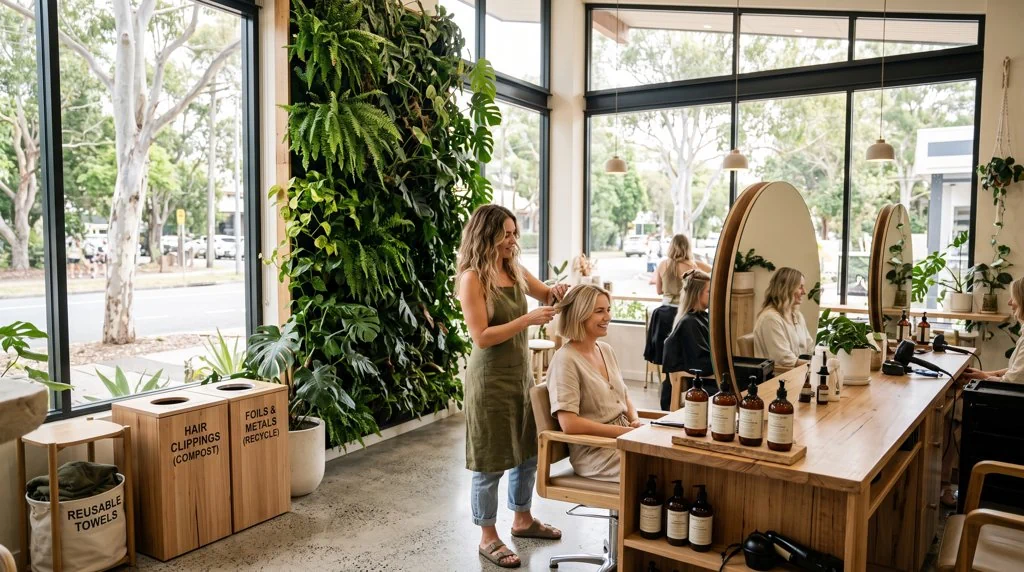
Linen and Laundry
Disposable products create substantial landfill waste.
Where appropriate for the treatment, salons may reduce waste through:
- washable towels
- reusable headbands
- microfiber cloths
- energy-efficient laundry practices
Always ensure reusable items are cleaned and disinfected according to applicable hygiene requirements.
Environmental sustainability should never compromise infection control.
Energy Efficiency in Salons
Reducing electricity use is usually a business decision rather than a legal obligation.
Practical improvements include:
- LED lighting
- motion sensors
- energy-efficient appliances
- programmable air conditioning
- switching equipment off after hours
- regular maintenance of treatment devices
For practical business energy advice, see Energy.gov.au .
Water Conservation
Beauty treatments can consume significant amounts of water.
Simple improvements include:
- low-flow taps
- leak monitoring
- efficient washing practices
- full laundry loads
- water-efficient equipment
Many state water authorities also provide business water-efficiency resources.
Choosing Sustainable Suppliers
Environmental responsibility extends beyond your salon.
When comparing suppliers, consider:
- recyclable packaging
- refill options
- Australian warehousing
- repairable equipment
- spare parts availability
- product longevity
- manufacturer sustainability policies
Long-lasting equipment is often both more sustainable and more economical than frequently replacing cheaper alternatives.
Greenwashing: Be Careful With Marketing Claims
Environmental claims are regulated under Australian Consumer Law.
Businesses should avoid unsupported claims such as:
- eco-friendly
- non-toxic
- sustainable
- biodegradable
- zero waste
- environmentally safe
unless they can be substantiated.
The ACCC has increased its focus on environmental marketing claims.
Read the current guidance at ACCC – Environmental and Sustainability Claims .
Environmental Checklist for Beauty Businesses
Waste Management
- Separate recyclable materials
- Dispose of chemicals correctly
- Keep SDS for hazardous products
- Use approved sharps disposal where required
Energy & Water
- Use LED lighting
- Switch equipment off after hours
- Monitor water use
- Maintain energy-efficient appliances
Purchasing
- Choose refill options where practical
- Purchase durable equipment
- Reduce unnecessary packaging
- Recycle electrical equipment responsibly
Compliance
- Know your local council waste requirements
- Follow manufacturer disposal instructions
- Check state environmental guidance for hazardous waste
- Review environmental marketing claims before advertising
Check Current Requirements
Environmental regulations continue to evolve. Before introducing new services or changing your waste practices, verify the latest guidance with the relevant authority.
National Authorities
- Department of Climate Change, Energy, the Environment and Water — National environmental policy and waste initiatives.
- Safe Work Australia — Chemical safety, SDS guidance and workplace hazardous substances.
- Australian Competition and Consumer Commission — Environmental marketing and greenwashing guidance.
Recycling Programs
- National Television and Computer Recycling Scheme — E-waste recycling.
- B-cycle Battery Recycling — Battery collection locations.
Local Government
- Australian Local Government Association — Find your local council for commercial waste, recycling and trade waste requirements.
Final Takeaway
Environmental compliance for beauty businesses isn’t about becoming a zero-waste salon overnight.
It’s about understanding the difference between legal environmental responsibilities and voluntary sustainability initiatives.
Most salons should focus on four priorities:
- Dispose of waste and chemicals correctly.
- Follow workplace and public health requirements.
- Reduce energy and water use where practical.
- Make environmental marketing claims only when they can be substantiated.
By combining compliance with sustainable business practices, salons can reduce costs, improve their environmental impact and build greater trust with increasingly eco-conscious clients.
Important Disclaimer
This article provides general educational information for Australian beauty professionals and businesses. It does not constitute legal or environmental advice.
Environmental requirements vary according to your location, business activities, waste streams and state or territory legislation. Always verify current requirements with your local council and the relevant government authority before introducing new waste-management or environmental practices.
which do you think is the best
For the environmental article, I think the version above is the best direction.
More broadly, for the ABA compliance series, I think the format we’ve now settled on with the Privacy article and State-by-State article is strongest. It does three things particularly well:
- Explains the law in plain English without making ABA sound like the regulator.
- Separates legal requirements from best practice, insurer requirements, training recommendations, or voluntary measures.
- Links directly to the responsible government body so readers can verify current requirements themselves.
For the environmental article specifically, I would make one change before publishing: remove the numbered “four priorities” at the end and make the conclusion slightly more authoritative and professional. I’d also be cautious with the phrase “Most salon waste is classified as ordinary commercial waste” because waste classification varies by material and jurisdiction. Better would be: “Beauty businesses can generate several different waste streams, and the appropriate disposal method depends on the material and local requirements.”