Salon Retail: How to Curate a High-Converting Product Shelf
Turn Your Retail Space into a Trusted Source of Expert Recommendations
For many Australian salons and clinics, retail can be the most underutilised revenue stream — yet it holds enormous potential. A well-curated retail shelf doesn’t just add income; it strengthens your brand, builds trust, and keeps your clients engaged between appointments.
Today, clients are more educated and selective than ever. They research ingredients, follow skincare influencers, and expect professional-grade results. To stand out, your retail offering must do more than fill space — it needs to tell a story and solve real problems.
Here’s how to transform your retail space into a high-converting experience that benefits both your business and your clients.

1. Understand What Clients Actually Want
Clients no longer buy out of impulse; they buy out of confidence.
They want products that:
- Deliver visible results.
- Are backed by professional recommendation.
- Align with their values — cruelty-free, sustainable, or Australian-made.
Before expanding your retail range, ask:
- What are the top three skin or body concerns I see daily?
- Which ingredients or product types do my clients ask about most?
- What does my ideal client value — luxury, science, or natural simplicity?
By curating around needs instead of trends, you position your salon as a trusted advisor rather than a salesperson.
2. Choose Professional-Grade Brands that Reflect Your Identity
Your retail brands should complement your treatment philosophy.
If your clinic focuses on corrective skincare, choose brands with clinical backing and active formulations. If your spa promotes wellness and relaxation, stock holistic or aromatherapy-based products.
Australian clients respond strongly to authenticity.
Mixing brands without cohesion can confuse your audience — instead, select two to three professional lines that reflect your expertise.
When negotiating with suppliers, look for:
- Training and education support for your team.
- Marketing assets you can use online and in-store.
- Stock rotation options to avoid tying up cash flow.
A strong retail partnership makes your shelf both profitable and credible.
3. Design a Retail Display That Sells for You
Visual merchandising is silent selling — and it matters.
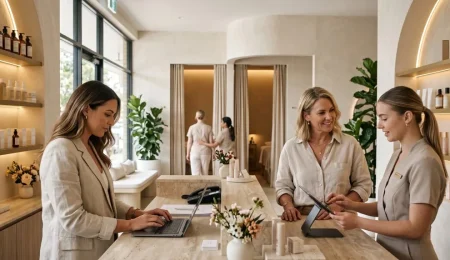
Your retail area should feel like an extension of your treatment space, not an afterthought near reception.
Key principles to follow:
- Keep it simple: Feature a few hero products per shelf rather than clutter.
- Use lighting strategically: Soft, warm lighting enhances luxury appeal.
- Incorporate your brand colours: Gold, silver, and white create cohesion and elegance.
- Highlight “staff favourites” or “top picks”: Clients trust therapist recommendations.
Consider placing educational materials beside each product — ingredient highlights, before-and-after photos, or QR codes linking to short video tips.
When clients understand why something works, they’re more likely to invest.
4. Train Your Team to Educate, Not Sell
Your team’s confidence is the most powerful retail driver.
Encourage therapists to weave product education naturally into consultations and treatments rather than relying on a “hard sell” at checkout.
Simple scripting helps:
- “I’ve used this serum today because it continues your results at home.”
- “To maintain that glow, this product will support your next facial perfectly.”
Regular brand training ensures everyone speaks with authority. Clients notice when advice feels consistent and expert — and that consistency converts.
5. Leverage Technology for Smarter Retail
Technology is reshaping how salons manage and promote retail.
In 2025, leading salons use integrated systems to:
- Track stock levels and automatically reorder top-selling items.
- Send personalised retail recommendations after treatments.
- Offer “click and collect” or delivery options via online stores.
Some booking systems even link retail purchases to loyalty programs, rewarding clients for at-home care.
This creates a seamless ecosystem — treatment, product, reward — that keeps clients engaged long after their appointment.
6. Combine Retail with Education Events
Hosting small, value-packed events can boost both retail and client loyalty.
Consider offering:
- “Skin School” evenings with live demos and product testing.
- Seasonal product launches featuring giveaways and exclusive discounts.
- Educational social media livestreams where your team answers skincare questions.
These events reinforce your authority and provide clients with a memorable, interactive experience.
When clients feel part of your community, they buy with confidence.
7. Measure, Refine, Repeat
Retail success doesn’t happen by chance. It comes from tracking performance and refining strategy.
Monitor:
- Best-selling and slow-moving items.
- Average retail spend per client.
- Conversion rate from consultation to retail sale.
Adjust your product mix every quarter based on data and feedback.
Seasonal changes, economic trends, and client demographics all influence buying patterns — so stay agile.
Final Thoughts
Your retail shelf is more than a display — it’s an opportunity to extend your professional care beyond the treatment room.
By choosing the right brands, training your team, and designing an inviting space, you turn product sales into part of your client experience. When clients see retail as an extension of their results, not an upsell, conversion happens naturally.
Now, the most successful Australian salons will be those that treat retail as education, design, and strategy — not as an afterthought.
Your shelves can be silent ambassadors for your brand — polished, purposeful, and profitable.