
The 2026 Beauty Business Reset: What Salon Owners Must Do to Stay Competitive
The beauty industry isn’t “changing” in 2026 — it has already changed. Client behaviour, technology, staffing, pricing, and competition have all shifted at the same time, creating a pressure point that most salon owners can feel but can’t quite articulate.
This article breaks down the five structural shifts shaping the industry right now and the non‑negotiable actions salon owners must take to stay competitive.
1. The Tech Consolidation Era Has Arrived
For the past decade, salons added tech reactively: a booking system here, a marketing tool there, a subscription for something they barely use. 2026 is the year owners finally realise:
Tech is either making you money or costing you money. There is no neutral.
What’s changed
- Clients expect instant booking, real‑time availability, and automated reminders.
- AI tools now handle admin, marketing, and client communication faster than humans.
- Subscription creep is draining profit margins.
What salon owners must do
- Audit every tool and cut anything that doesn’t directly increase revenue or reduce labour.
- Move to a lean tech stack: booking system, payment system, AI assistant, and one marketing channel.
- Automate everything that can be automated — especially reminders, follow‑ups, and rebooking prompts.
Competitive advantage: speed, accuracy, and consistency.
2. Client Behaviour Has Shifted — Permanently
The 2026 client is impatient, informed, and selective. They want:
- Same‑day or next‑day availability
- Personalised recommendations
- Ingredient‑based product knowledge
- Transparent pricing
- A frictionless experience
They also have zero tolerance for inconvenience.
What salon owners must do
- Offer a mix of appointments and controlled walk‑ins.
- Use AI to personalise product and service recommendations.
- Reduce friction: faster checkouts, fewer forms, clearer communication.
- Stop guessing what clients want — use data from booking patterns, service frequency, and retail history.
Competitive advantage: understanding clients better than competitors do.
3. Pricing Models Are Being Rewritten
The old pricing logic — “raise prices once a year and hope for the best” — is dead.
Costs have risen. Client expectations have risen. But clients will still pay premium prices if the value is clear and the experience is consistent.
What salon owners must do
- Move to value‑based pricing, not time‑based pricing.
- Introduce tiered services that reflect skill, speed, and personalisation.
- Communicate price changes with clarity, not apology.
- Track profitability per service, not just per day.
Competitive advantage: pricing that reflects reality, not fear.
4. The Staffing Landscape Has Flipped
The solo boom is slowing. Many independents are returning to teams because:
- They’re burnt out
- They want stability
- They want mentorship
- They want community
Meanwhile, salon owners are struggling with:
- Retention
- Culture
- Training
- Compensation models
What salon owners must do
- Build a hybrid structure: salary + commission + incentives.
- Create a culture that values growth, not just output.
- Offer clear pathways: junior → senior → specialist → educator.
- Use AI to reduce admin so staff can focus on clients.
Competitive advantage: a team that stays.
5. Trend Fatigue Is Real — Strategy Beats Hype
TikTok trends are loud but short‑lived. Salon owners are tired of chasing micro‑trends that don’t translate into revenue.
2026 is the year of strategic trend adoption.
What salon owners must do
- Adopt trends that align with your brand, skillset, and client base.
- Ignore trends that require expensive retraining for minimal return.
- Focus on long‑term shifts: wellness, sustainability, personalisation, and skin‑health‑driven beauty.
Competitive advantage: clarity, not chaos.
The 2026 Reset: What It Really Means
The salons that thrive in 2026 will be the ones that:
- Simplify their tech
- Understand their clients
- Price with confidence
- Build strong teams
- Choose trends strategically
The salons that struggle will be the ones that:
- Keep doing what worked in 2019
- Avoid technology
- Underprice out of fear
- Ignore client behaviour shifts
- Chase every trend without a filter
This is the year the industry separates into two groups: those who adapt and those who fall behind.

Salon Membership Programs: How to Build Recurring Revenue That Works
Most beauty businesses would happily trade some of the uncertainty of next month’s appointment…
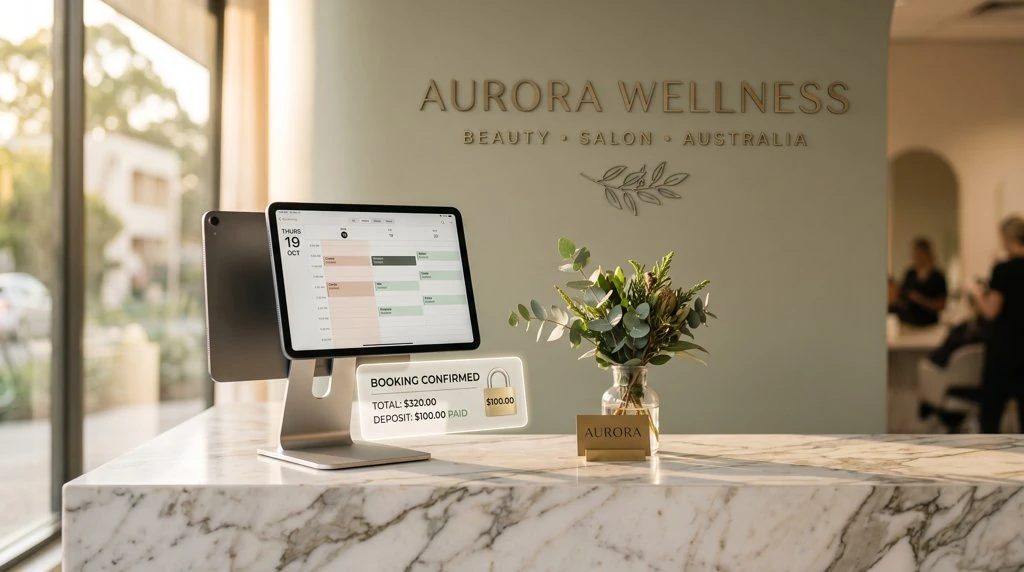
Beauty Salon Deposits, Cancellation Fees & No-Shows: What Australian Businesses Need to Know
No-shows and last-minute cancellations can be expensive for beauty businesses. A two-hour appointmen…

High-Margin Beauty Equipment Treatments: How to Choose Profitable Salon Technology
Beauty equipment is often sold to salon owners with an extremely attractive proposition. Buy the mac…

Why Good Beauty Therapists Leave
The Staff Retention Problems Salon Owners Can Actually Fix You finally find them. They’re tale…
One Bad Review Can Travel Fast … How Beauty Businesses Should Handle Negative Online Reviews
You finish a long day, pick up your phone and see it. A one-star review. Perhaps you recognise the c…

What Every Beauty Business Owner Should Consider Getting Their Staff to Sign
Most beauty businesses don’t have an employment-document problem until they have an employment…
