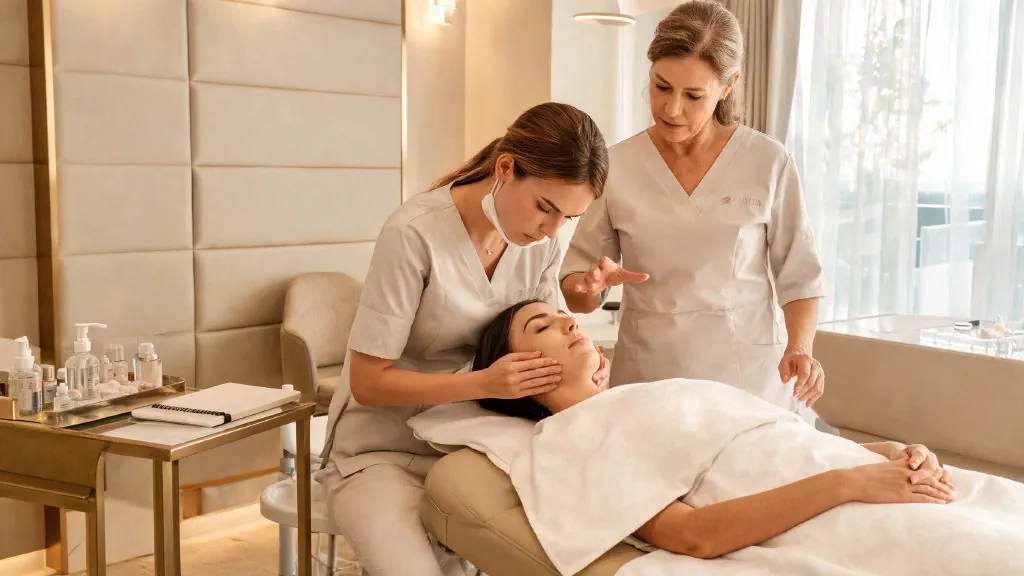
Beauty Trainees and Apprentices in Australia: What Salon Owners Need to Know
Hiring someone who is still learning can be one of the best investments a beauty business makes. Trainees and apprentices can grow with the salon, develop strong professional habits and eventually become highly capable therapists who understand the business from the ground up.
But there is an important distinction salon owners need to understand from the beginning: calling someone a trainee does not automatically make them one.
In everyday conversation, beauty businesses often use words such as trainee, junior, apprentice, student and graduate interchangeably. Legally and industrially, however, those descriptions can mean very different things.
A person may be studying beauty therapy while working in your salon without necessarily being employed under a formal traineeship. Another employee may be undertaking a registered beauty therapy apprenticeship. Someone else may be completing a vocational placement through an education provider and may not be your employee at all.
Those differences can affect pay, training arrangements, supervision, working hours and other employment obligations.
For salon owners, the safest starting point is therefore not to ask, “What can I pay a trainee?” but:
What is this person’s actual employment and training arrangement?
A Trainee Is Not Simply Someone Who Is New
Under Australia’s workplace relations system, a trainee is generally an employee undertaking a qualification through a formal training contract. Apprenticeships and traineeships combine paid employment with structured training and must generally be registered through the relevant state or territory training authority.
This means a salon cannot simply hire an inexperienced employee, describe them as a trainee and automatically pay a lower trainee wage.
Similarly, a young employee is not automatically a trainee simply because they are under 18, still studying or have never worked in a salon before.
Before applying an apprentice or trainee rate, establish whether there is actually a formal training contract and determine which award provisions or other employment arrangements apply.
For many salon employees, the Hair and Beauty Industry Award will be relevant. The Award contains provisions for beauty therapy apprentices as well as other apprentice, trainee and graduate arrangements.
Because classifications and pay rates can change, salon owners should use the current Fair Work Pay and Conditions Tool rather than relying on an old wage table saved in the office.
Apprentice, Trainee, Student and Junior Employee Are Different Things
Beauty businesses should avoid treating all learners as though they fall into one employment category.
A beauty therapy apprentice is an employee completing an apprenticeship under a formal training arrangement. The Hair and Beauty Industry Award includes specific minimum rates for beauty therapy apprentices.
A trainee is also an employee working towards an approved qualification under a formal training contract, but traineeships operate under different provisions.
A junior employee may simply be an employee who is younger than 18 and is paid according to applicable junior provisions. Being junior does not automatically make that person a trainee.
A student may be undertaking education independently while also working for your salon as an ordinary employee. Their enrolment in a beauty course does not necessarily change their employment classification.
A student may also attend a salon as part of a legitimate vocational placement organised through an education provider. That is a different arrangement again and should not be confused with ordinary paid employment.
These distinctions matter because the wrong classification can lead to the wrong pay rate and the wrong assumptions about what the business is entitled to expect.
A Formal Training Arrangement Comes With Responsibilities
Taking on an apprentice or trainee should not be viewed as an opportunity to obtain inexpensive labour.
The business is accepting responsibility for supporting someone’s development towards a recognised occupational outcome.
A formal training arrangement normally involves a training contract and an approved training provider, together with requirements established through the relevant state or territory apprenticeship and training system.
The details can vary between jurisdictions, so employers should check the training authority in the state or territory where the apprentice or trainee is employed.
Salon owners should understand the training plan, what competencies the learner is expected to develop, how workplace learning contributes to that development and what role the business is expected to play.
If nobody in the business knows what the learner is supposed to be learning this month, the apprenticeship or traineeship is already becoming disconnected from its purpose.

Training Time Is Still Work Time
This is an area where employers can easily make mistakes.
Where an employee is required to undertake training as part of their job, that training will generally need to be paid. For apprentices, the Hair and Beauty Industry Award specifically provides for release from work to attend training or assessment required under the training arrangement, without loss of pay or continuity of employment.
Relevant training time can also count as time worked.
That means an apprentice should not normally be expected to spend a full day performing salon duties and then complete required training unpaid at night simply because the business considers education to be “their responsibility”.
There are particular arrangements for school-based apprentices and some trainees, so employers should check the rules applying to the individual’s arrangement rather than assuming every learner is treated identically.
The same principle is useful more broadly in salons: if an employee is required to attend compulsory workplace training, meetings or education as part of their employment, don’t automatically assume that time can be unpaid.
Can a Beauty Apprentice or Trainee Treat Paying Clients?
This question cannot be answered with a single rule such as “trainees can never treat clients” or “once they have been shown the treatment, they can work independently”.
What matters is the person’s training, competency, supervision, the treatment involved and any legal, insurance or workplace requirements applying to that service.
A learner may progressively perform more services as their capability develops. That progression should be deliberate.
Before allowing an apprentice or trainee to perform a treatment on a paying client, ask whether they have received the relevant instruction, demonstrated the required skill, understand contraindications and precautions, know what to do if something goes wrong and can recognise when they need assistance.
The complexity and potential risk of the treatment should influence the level of supervision.
A basic service that has been repeatedly demonstrated and assessed is very different from allowing an inexperienced learner to independently operate an advanced device after watching one demonstration.
Competency should determine progression—not how busy Saturday’s appointment book happens to be.
Supervision Should Change as Competency Develops
Good supervision does not mean standing behind an apprentice for every minute of their employment.
It means providing a level of oversight appropriate to their experience and the task.
At the beginning, that may involve direct demonstration and close observation. As the learner develops, supervision may move towards periodic checking, case discussion and greater independence.
The important point is that independence should be earned through demonstrated competence, not simply granted because a certain number of weeks have passed.
A practical progression might look like this:
- The trainer explains and demonstrates the treatment.
- The learner observes the treatment several times where appropriate.
- The learner performs the treatment under direct supervision.
- Feedback and additional practice are provided.
- Competency is assessed and documented.
- The learner begins performing the service with the level of supervision considered appropriate.
- Competency is reviewed when treatments, equipment or procedures change.
This is a much stronger approach than “she’s been here three months, so she should know it by now”.
Young Workers May Need More Support Than Experienced Employees
Many apprentices and trainees enter beauty businesses early in their working lives. Some may be experiencing their first proper workplace.
That matters.
A 17-year-old employee may not recognise unsafe behaviour, inappropriate treatment by a client or unreasonable workplace expectations in the same way an experienced worker might. They may also be less confident questioning a manager or saying that they do not understand an instruction.
Managers should therefore make it normal for learners to ask questions, request assistance and admit when they are unsure.
Safety training should be paced appropriately rather than delivered in a huge induction session and then forgotten. Ask the employee questions, observe them performing tasks and check that they can actually demonstrate safe procedures.
A good salon creates a learner who thinks:
“If I’m not sure, I should ask.”
A poor training culture creates one who thinks:
“If I ask, they’ll think I’m incompetent.”
The second environment is where preventable mistakes happen.
Client Safety Comes Before Training Convenience
Training businesses sometimes fall into the trap of treating clients as practice opportunities rather than people receiving professional services.
A client should not unknowingly become the test case for whether a trainee has mastered a procedure.
Where a learner will be involved in providing a service, consider what the client should reasonably be told about the arrangement and how supervision will occur.
The business should also have a process for deciding which treatments are appropriate for learners and which require greater experience, additional training or particular qualifications.
For treatments involving equipment, skin penetration or other higher-risk procedures, check applicable state or territory rules, insurer requirements, infection-control obligations and manufacturer instructions.
Australia does not have one single beauty-industry licensing system covering every treatment in every state, so requirements can vary according to the service and jurisdiction.
The fact that a person is training does not lower the business’s responsibility to manage client and workplace safety.
Don’t Use “Trainee” as an Excuse for Poor Pay
One of the most important rules for salon owners is simple: you cannot apply a trainee or apprentice rate merely because an employee is inexperienced.
Fair Work specifically warns that an employer cannot pay a young worker trainee or apprentice rates unless the employee is actually employed under the relevant formal training arrangement.
Current apprentice and trainee rates depend on the applicable award, training arrangement and individual circumstances. Factors can include the type and stage of apprenticeship, age, schooling and other award provisions.
Beauty therapy apprentices have specific rates under the Hair and Beauty Industry Award, and those rates were updated again from the first full pay period on or after 1 July 2026.
Rather than publishing a wage table that will eventually become obsolete, ABA recommends checking the current award and using Fair Work’s Pay and Conditions Tool whenever you review apprentice or trainee wages.
Remember too that base wages are not the only consideration. Depending on the arrangement, penalty rates, overtime, allowances, leave and other entitlements may also apply.
Keep Accurate Records of What They Can Actually Do
A training record should be more useful than a folder containing certificates.
For each learner, consider maintaining a simple competency record showing the treatments and workplace procedures they have been trained in, who delivered the training, whether practical competency has been assessed and what level of supervision is currently required.
This can include areas such as consultation, infection control, equipment operation, client photography, aftercare, retail recommendations, emergency procedures and treatment-specific skills.
As skills develop, update the record.
This becomes particularly useful in salons with several senior therapists. Without a shared system, one manager may assume the apprentice has been signed off on a treatment because another therapist allowed them to perform it once.
Documentation prevents assumptions becoming your competency system.
For a broader framework, see ABA’s guide to Effective Staff Training Programs for Beauty Salons.
Don’t Give Learners Responsibility Without Authority or Support
Beauty trainees often find themselves in an awkward position.
They may be expected to provide a professional client experience while being too inexperienced to confidently challenge a client request.
For example, a client may insist on a treatment the trainee believes is unsuitable. The learner needs to know exactly what to do next.
Who should they call?
Can they stop the service?
Who deals with the client if there is disagreement?
What happens if a senior therapist isn’t immediately available?
These questions should be answered before they happen.
A trainee should never feel that protecting the booking is more important than asking for help.
Salon managers should make it explicitly acceptable for learners to pause a treatment and seek assistance.
Mistakes Should Become Part of the Learning System
Trainees will make mistakes. So will senior therapists.
The difference is that a learner is, by definition, still developing professional judgement.
When something goes wrong, determine whether the issue reflects lack of knowledge, insufficient supervision, unclear instructions, inadequate training, a system failure or behaviour that genuinely requires performance management.
If a trainee consistently makes the same error after repeated instruction and support, that may become a performance or training-progression issue. But simply saying “you should have known” is not useful if nobody ever taught them.
Encourage early reporting of mistakes and near misses.
An apprentice who immediately says, “I think I used the wrong setting and I need you to check” gives the business an opportunity to respond.
An apprentice who is terrified of being blamed may hide it.
The second situation is far more dangerous.
Don’t Confuse a Vocational Placement With Free Labour
Another area beauty businesses need to handle carefully is unpaid work.
A genuine vocational placement connected with an education or training course can operate differently from ordinary employment.
But a salon cannot simply bring somebody in for weeks of unpaid productive work and call it “work experience” because the person wants experience.
If an employment relationship exists, minimum employment entitlements generally apply.
Similarly, an unpaid trial should only be used in limited circumstances to demonstrate the skills genuinely required for the job and should not become an extended period of productive work.
Salon owners should check current Fair Work guidance on unpaid work before offering internships, work experience or extended trials.

Give Trainees Real Education, Not Just the Jobs Nobody Else Wants
There is nothing wrong with apprentices and trainees helping clean rooms, prepare treatment areas, restock supplies or perform other normal salon duties.
Experienced therapists should be contributing to those tasks too where appropriate.
Problems arise when the learner spends month after month doing little more than laundry, sweeping floors and making tea while receiving almost no meaningful development.
If your business has taken somebody on through a formal training arrangement, regularly ask whether the workplace experience is genuinely helping them progress.
Are they observing senior therapists?
Are they practising consultation?
Are they progressively developing technical skills?
Are they receiving feedback?
Are they learning how to interact professionally with clients?
Are they becoming more capable than they were three months ago?
Cheap labour is not an apprenticeship strategy.
Treat Models Professionally
Trainee education frequently involves models, discounted services or supervised practice.
The fact that a service is free or discounted does not remove the need for professional client care.
Models should receive appropriate consultation and screening. They should understand that the treatment is being performed by a learner where that is relevant, and the business should manage consent, privacy, photographs, treatment records and aftercare appropriately.
Training models are not disposable practice material.
They are people receiving a service in your workplace.
Progression Should Be Based on Evidence
Salon owners sometimes make one of two mistakes with learners.
The first is holding them back for too long because the owner is nervous about letting go.
The second is advancing them too quickly because the salon needs another pair of hands.
Neither approach is particularly fair.
Progression should be linked to demonstrated skill.
A learner who has consistently demonstrated safe, competent performance should have opportunities to grow. A learner who cannot yet demonstrate competency should receive more training and supervision rather than being pushed forward because the roster is short.
This is where regular development meetings help.
Instead of discussing performance only when something goes wrong, review what the learner can now do independently, where they still require supervision, what their next competencies are and what support they need to reach them.
That turns an apprenticeship or traineeship into a professional pathway rather than simply a lower-paid employment category.
The ABA Trainee and Apprentice Check
Before taking on or reviewing a trainee or apprentice, salon owners should be able to answer the following questions:
- What is this person’s actual employment classification?
- Is there a formal registered training contract where one is required?
- Which award, agreement and pay provisions apply?
- What training organisation is involved?
- What qualification are they working towards?
- What paid training or assessment time needs to be allowed?
- Who in the salon is responsible for their workplace development?
- Which services are they currently competent to perform?
- Which treatments require supervision?
- How is competency recorded?
- Does the insurer impose any requirements concerning trainee-performed treatments?
- Are relevant state or territory health, safety or licensing requirements being met?
- Do clients need to be informed about the learner’s involvement?
- How often is progress reviewed?
- What is the next skill the learner is working towards?
If the business cannot answer those questions, the training arrangement probably needs more structure.
ABA Expert Tip: Ask “What Are They Learning This Month?”
This is one of the simplest ways to test whether your training program is working.
Ask the apprentice or trainee:
“What are you working towards becoming competent in this month?”
Then ask their supervisor the same question.
If the answers are completely different—or neither person knows—you may have a training contract without a meaningful workplace training system.
A good learning environment has visible progression.
Common Mistakes Beauty Businesses Make With Trainees
One of the biggest mistakes is assuming that “trainee” is simply another name for a cheap junior employee. It isn’t. Formal traineeships and apprenticeships come with real training arrangements and employment obligations.
Another is expecting unpaid required training because the employee is supposedly benefiting from gaining a qualification. Applicable training and assessment time can be paid working time.
Poor supervision is another recurring problem. Leaving a learner completely alone before they are ready is not independence; it is inadequate support. At the opposite extreme, never allowing a competent learner to progress can prevent them developing professional confidence.
Some salons also focus so heavily on technical training that they neglect consultation, communication, hygiene, client records, safety, complaints and professional boundaries. Becoming an excellent beauty therapist requires more than learning treatment steps.
Finally, don’t allow staffing pressure to determine competency. A fully booked Saturday does not make somebody ready for a treatment they could not safely perform on Friday.

Frequently Asked Questions
Can I call a new beauty therapist a trainee?
You can use informal language within the business, but calling someone a trainee does not automatically make them a formal trainee for pay and employment purposes. Formal traineeships involve an appropriate training contract.
Can I pay someone a trainee wage because they are inexperienced?
Not simply because they are inexperienced. Apprentice and trainee wage provisions apply to particular formal arrangements. Check the relevant award and training contract before applying those rates.
Are beauty therapy apprentices covered by the Hair and Beauty Industry Award?
The current Hair and Beauty Industry Award contains specific minimum-rate provisions for beauty therapy apprentices, as well as relevant apprentice, trainee and graduate provisions.
Does an apprentice have to be paid while attending required training?
Under the Hair and Beauty Industry Award, an apprentice must be released to attend training and assessment in accordance with the training arrangement without loss of pay, and relevant training or assessment time is treated as time worked, subject to particular rules including those for school-based arrangements.
Can trainees perform treatments on clients?
Potentially, depending on the person’s training, demonstrated competency, level of supervision, the treatment and any applicable insurance or regulatory requirements. Do not use a blanket assumption that every trainee can—or cannot—perform every service.
Can a trainee operate beauty equipment?
Only once the business is satisfied that the person has received appropriate training and can use the equipment safely within the required level of supervision. Additional regulatory, licensing, manufacturer or insurance requirements may apply depending on the device and jurisdiction.
Can I use unpaid students in my salon?
Some legitimate vocational placements and other unpaid arrangements can be lawful, but productive work performed within an employment relationship generally needs to be paid. Check Fair Work’s current unpaid-work guidance before establishing an unpaid arrangement.
Who is responsible for supervising a trainee?
The employer remains responsible for managing the workplace, while the formal training arrangement may also involve an RTO and requirements under the relevant state or territory training system. Internally, salons should nominate experienced people who are clearly responsible for workplace coaching and supervision.
Can an apprentice be left alone in the salon?
Whether a learner can work without direct supervision will depend on factors including their age, competency, duties, safety risks and applicable training, insurance and regulatory requirements. Avoid adopting a blanket rule based purely on time served.
Are apprentices and trainees entitled to normal employee benefits?
They are employees and receive applicable employment entitlements, although particular apprentice and trainee arrangements can affect how some pay and training provisions operate.
Useful Australian Resources
Salon owners employing apprentices or trainees should use the Fair Work Ombudsman for current employment information and the current Hair and Beauty Industry Award when it applies to the role.
Fair Work also provides dedicated information about Apprentices and Trainees, Trainee Entitlements, Apprentice and Trainee Pay Rates and Unpaid Work.
Because apprenticeship and traineeship registration is administered at state and territory level, employers should also check with the relevant training authority for the jurisdiction in which the employee works.
Final Thoughts
A good beauty apprenticeship or traineeship should create something valuable for both sides.
The learner gains structured workplace experience, professional confidence and a pathway towards greater competency. The salon develops someone who understands its standards, clients and systems from the beginning.
But that only works when the word training actually means something.
A trainee is not simply the least experienced person in the salon. An apprentice is not cheap labour. And supervision is not something that disappears because the salon becomes busy.
Know the employment arrangement. Pay people correctly. Allow required training to happen. Give learners meaningful development. Assess competency before increasing responsibility. Make it safe to ask questions. And never allow the appointment book to push somebody into performing work they are not ready to do.
Done properly, employing someone who is still learning isn’t a compromise on professional standards.
It is one of the ways the beauty industry builds them.
This article provides general industry information only and is not legal, workplace-relations or training-system advice. Employment, apprenticeship and traineeship requirements can vary according to the applicable award, training contract and state or territory. Beauty businesses should check current official requirements and obtain professional advice where necessary.